Alcohol and Sleep: How Drinking Affects Your Night and Next-Day Energy
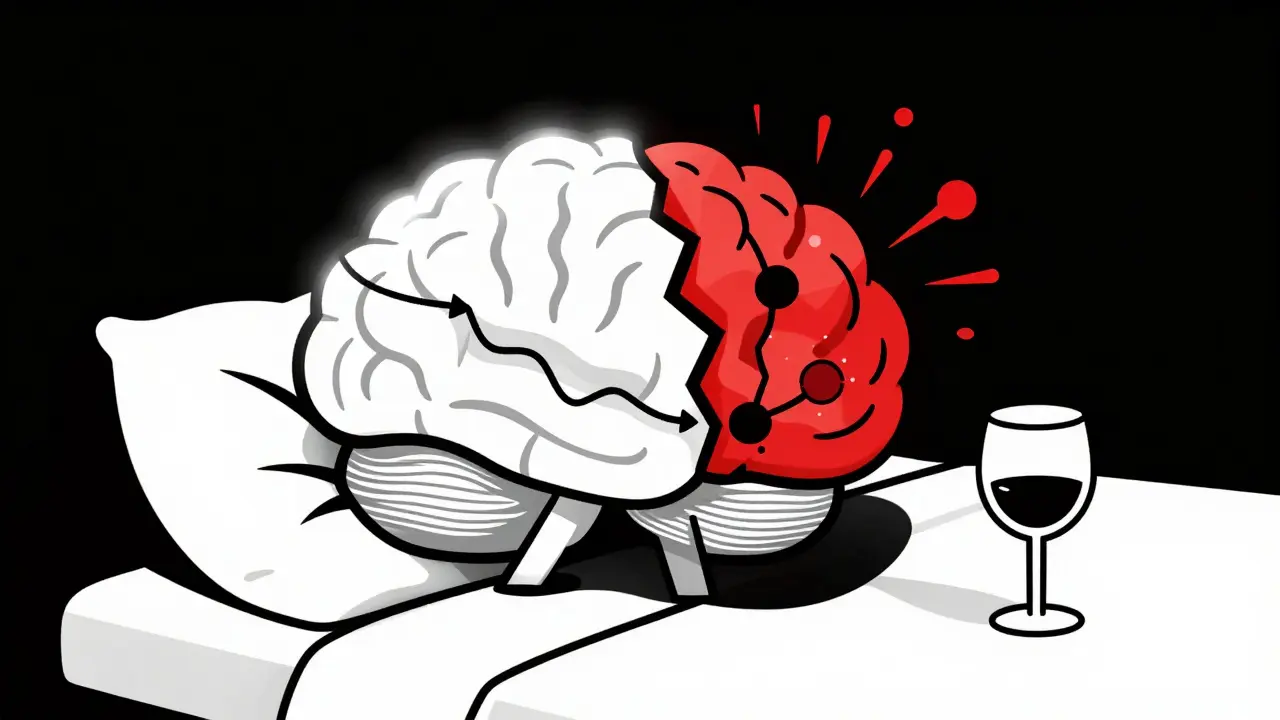
Many people reach for a nightcap thinking it will help them sleep better. But here’s the truth: alcohol doesn’t improve sleep - it ruins it. Even one drink close to bedtime can turn a good night’s rest into a broken, restless one. If you’ve ever woken up in the middle of the night feeling wide awake, had vivid dreams or nightmares, or felt foggy and irritable the next morning, alcohol might be the hidden cause.
How Alcohol Tricks Your Brain Into Sleep
Alcohol acts like a sedative at first. It increases adenosine in your brain - a chemical that builds up when you’re awake and makes you sleepy. This is why, right after drinking, you might feel drowsy and fall asleep faster. But this isn’t real sleep. It’s a forced shutdown. Your brain doesn’t get to go through its natural sleep cycle. Instead, it’s pushed into deep sleep (N3) too quickly, skipping the normal buildup of restorative stages.
Studies show that with moderate drinking (2-3 standard drinks), people fall asleep about 15 minutes faster than usual. Sounds good, right? But here’s the catch: as alcohol breaks down - roughly one drink per hour - your brain goes into reverse. Adenosine levels crash, and your body tries to wake itself up. This is why people often wake up at 2 or 3 a.m. after drinking, even if they passed out at 10 p.m.
Sleep Fragmentation: The Nightly Roller Coaster
Alcohol doesn’t just make you wake up once - it shatters your sleep into pieces. This is called sleep fragmentation. A 2023 study with 31 participants found that those who drank alcohol before bed had their sleep efficiency drop by 4.3%. That means more time spent lying awake, even if they thought they were sleeping.
Polysomnography (sleep lab tests) show that after drinking, people spend more time in light sleep (Stages 1 and 2) and less in the deep, restorative stages. The body tries to make up for the unnatural deep sleep early in the night by overcompensating later. The result? A night full of tossing, turning, and brief awakenings you don’t even remember.
Here’s what that feels like in real life: You go to bed at 11 p.m. with a glass of wine. You’re out cold by midnight. But by 2:30 a.m., you’re suddenly alert - heart racing, mind racing. You scroll on your phone. You get up for water. You can’t fall back asleep. By 6 a.m., you’re exhausted. You didn’t get less sleep - you got worse sleep.
Alcohol and Sleep Apnea: A Dangerous Combo
If you snore or have sleep apnea, alcohol is a red flag. Alcohol relaxes the muscles in your throat. That might sound harmless, but when those muscles are too loose, your airway can collapse during sleep. This causes pauses in breathing - sometimes 10, 20, even 30 seconds at a time. Your brain wakes you up just enough to gasp for air, then you fall back asleep. You never know it happened.
A 2021 study from the American Academy of Sleep Medicine found that each standard drink before bed increases the apnea-hypopnea index (AHI) by 20%. That means if you normally have mild sleep apnea, one drink could push it into moderate or severe territory. A 2022 meta-analysis in the Chest Journal showed that drinking 2-4 drinks daily raises your risk of moderate-to-severe sleep apnea by 25%. With five or more drinks, that risk jumps to 51%.
The American Thoracic Society says people with sleep apnea should avoid alcohol entirely within 3 hours of bedtime. Even small amounts can drop oxygen levels in your blood by 3-5%. That’s not just disruptive - it’s dangerous for your heart and brain.
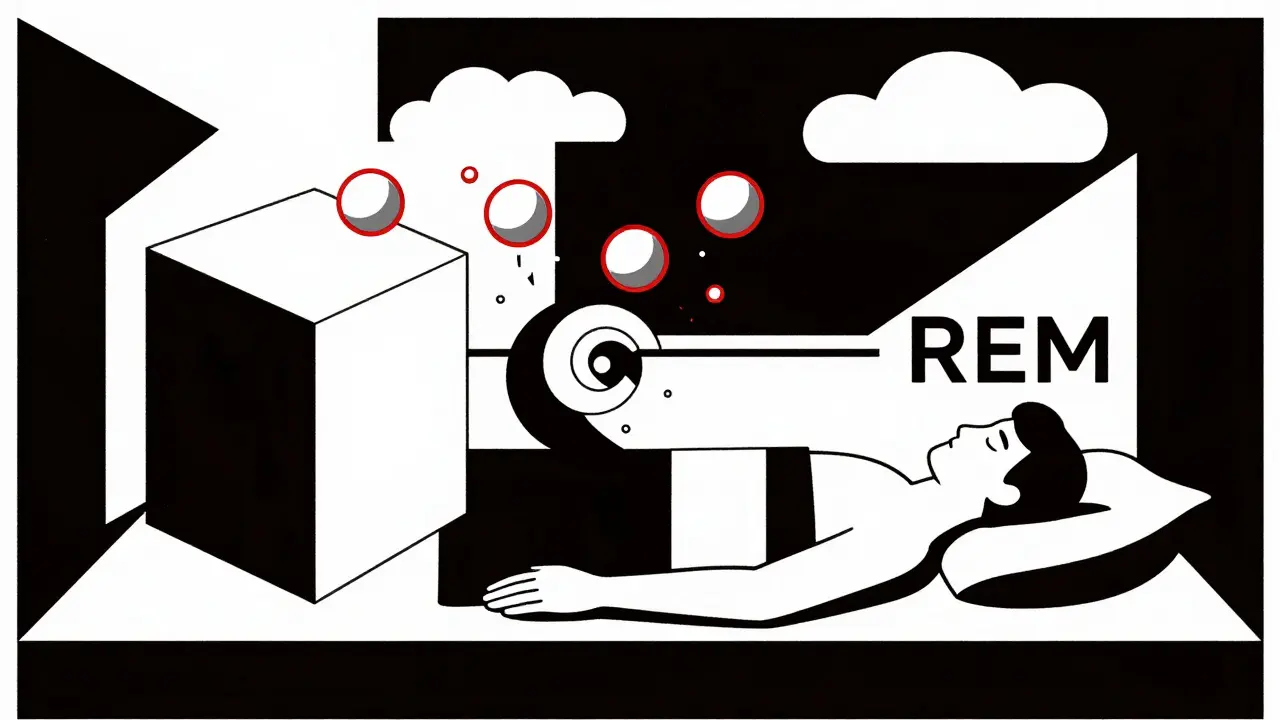
REM Sleep: The Stage Alcohol Kills
REM sleep is when you dream. But it’s also when your brain sorts memories, processes emotions, and repairs neural connections. Alcohol slashes REM sleep - by up to 9.3% even after just one drink. In the first half of the night, REM can drop by 50%. Then, as alcohol leaves your system, your brain tries to make up for it. You get REM rebound: intense, chaotic dreams, nightmares, or even sleepwalking.
This isn’t just annoying. Losing REM sleep affects your mood, creativity, and mental clarity. A 2023 study in Sleep Medicine Reviews found that regular drinkers before bed are 38% more likely to develop chronic insomnia. And it’s not just about falling asleep - it’s about whether your brain gets the emotional reset it needs.
Without enough REM, you’re more reactive to stress. A 2022 study from the University of Pittsburgh Medical Center showed that after drinking, people had 31.2% more emotional reactivity to negative images or situations the next day. That’s why you might snap at your partner, cry over a small thing, or feel unusually anxious after a night out.
Next-Day Effects: You Think You’re Fine - But You’re Not
Most people assume that if they slept 7 hours, they’re good to go. But alcohol distorts sleep quality without changing sleep duration. A 2023 study found that even with similar total sleep time, people who drank had 15.3% less slow-wave sleep - the deepest, most restorative stage. The result? Slower thinking, weaker memory, and reduced focus.
Participants in that same study performed 8.7% worse on cognitive tasks the next morning. Working memory dropped by 9.4%. Processing speed slowed by 12.7%. You might not notice it - your brain is good at masking fatigue - but your performance, decision-making, and reaction time are all impaired.
And it’s not just about work. Driving, parenting, managing stress - all of it suffers. A 2023 review in Addiction Biology confirmed: there is no safe dose of alcohol for sleep. Even one drink reduces sleep quality. No exceptions.
The Vicious Cycle: Drinking to Sleep, Then Needing More
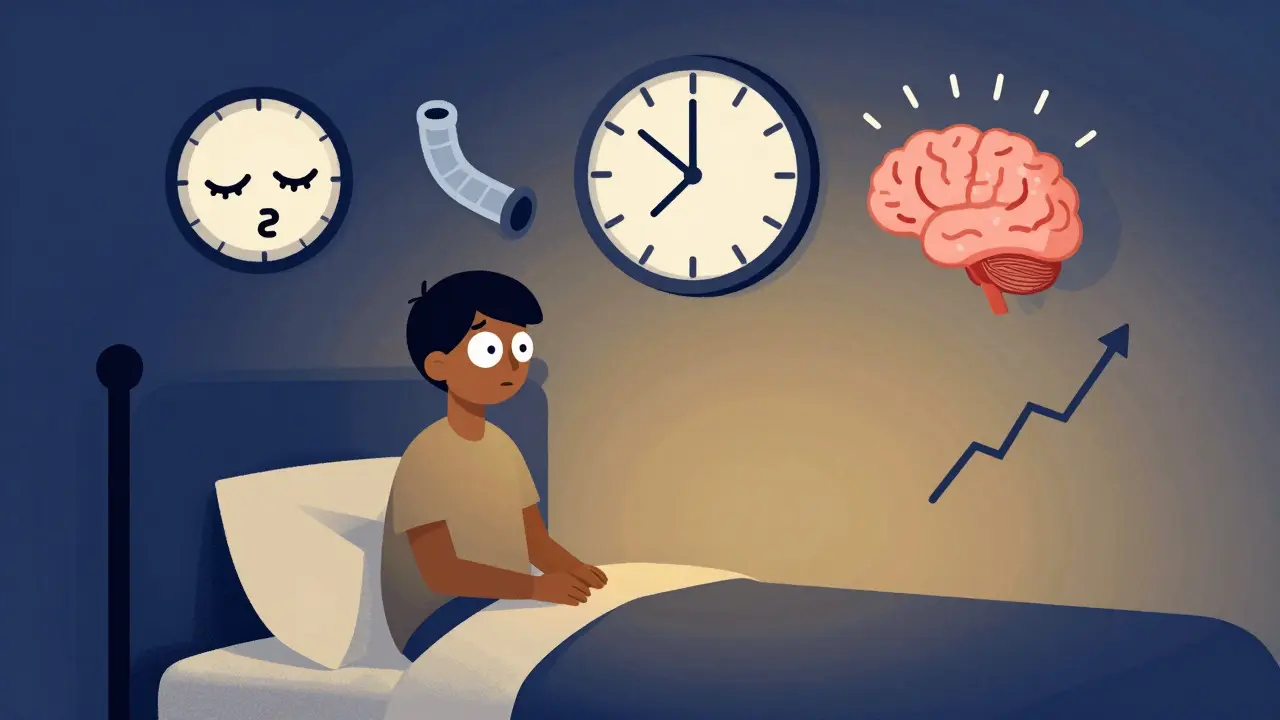
Here’s the trap: you drink to fall asleep. You wake up tired. So the next night, you drink again. The University of Missouri found that sleep deprivation after binge drinking increases the urge to drink more. It’s a loop: alcohol ruins sleep → tiredness increases cravings → you drink again → sleep gets worse.
This cycle is one reason why people with alcohol use disorder struggle so much with recovery. About 35% of those in recovery suffer from severe insomnia. And it’s not just temporary - sleep architecture can take 3 to 6 months to return to normal after quitting. That’s why many relapse: they can’t stand the sleepless nights.
What About Tolerance? Don’t I Get Used to It?
Some people say, “I’ve been drinking before bed for years. I’m fine.” But tolerance doesn’t mean your sleep is healthy. After 3-7 days of regular use, your body adapts to the sedative effect - you don’t fall asleep as fast. But the damage to your sleep architecture continues. Deep sleep still drops. REM still gets crushed. Apnea risk still rises.
A 36-year twin study in Sleep Advances tracked alcohol use and sleep quality over decades. The strongest link? Heavy drinking at age 30 predicted the worst sleep quality later in life. And here’s the kicker: older adults who drink before bed show cognitive decline 23% faster than those who don’t. Your brain doesn’t adapt - it just gets worn down.
What Should You Do?
If you drink and want better sleep:
- Avoid alcohol within 3 hours of bedtime. Even one drink can disrupt sleep.
- Don’t use alcohol as a sleep aid. It’s not a solution - it’s a problem.
- If you have sleep apnea, cut it out completely. No exceptions.
- Track your sleep with a simple app or journal. Notice if nights without alcohol feel more restful.
- If you’re trying to quit drinking, know that sleep will get worse before it gets better. It’s normal. It’s temporary. And it’s worth it.
Alcohol doesn’t help you sleep. It steals the quality of your rest. And over time, it steals more than just sleep - it steals your energy, your focus, your mood, and your health.
Does alcohol help you fall asleep faster?
Yes, alcohol can make you fall asleep faster by increasing adenosine in the brain. But this is not restful sleep. It forces deep sleep early, then disrupts the rest of the night. The trade-off is poor sleep quality, fragmented sleep, and less REM sleep.
Can one drink before bed really affect sleep?
Yes. Even one standard drink (like a 5 oz glass of wine) reduces REM sleep by 9.3% and increases sleep fragmentation by 11.7%. It doesn’t take much to disrupt your natural sleep cycle. The myth of the "nightcap" helping sleep has been debunked by multiple studies using objective sleep monitors.
Why do I wake up in the middle of the night after drinking?
Alcohol metabolizes at about one drink per hour. After the initial sedative effect wears off, your brain goes into rebound mode. Adenosine levels drop, your body tries to compensate, and you wake up. This usually happens 3-5 hours after drinking, which is why people often wake up around 2-4 a.m. with no clear reason.
Does alcohol make sleep apnea worse?
Yes. Alcohol relaxes throat muscles, making airway collapse more likely. Each drink before bed increases the apnea-hypopnea index (AHI) by 20%. For people with sleep apnea, even one drink can turn mild symptoms into moderate or severe episodes. The American Thoracic Society recommends avoiding alcohol entirely if you have sleep apnea.
How long does it take for sleep to improve after quitting alcohol?
Sleep begins improving within days, but full recovery of sleep architecture - especially REM and slow-wave sleep - can take 3 to 6 months. During early abstinence, many people experience insomnia, vivid dreams, or night sweats. This is normal and temporary. With time, sleep quality improves significantly.
Why do I feel more emotional the day after drinking?
Alcohol suppresses REM sleep, which is essential for emotional regulation. Without enough REM, your brain can’t process emotions properly. Studies show people are 31.2% more reactive to negative stimuli after drinking. This explains why you might cry, get angry, or feel anxious the next day - even if you didn’t feel that way before bed.
Is there any benefit to drinking alcohol for sleep?
No. A 2023 meta-analysis in Addiction Biology reviewed over 50 studies and found no evidence that alcohol improves sleep quality at any dose. Even small amounts reduce REM sleep, increase fragmentation, and lower oxygen levels during sleep. The idea that alcohol helps sleep is a myth - supported by how you feel right after drinking, not by what your body actually needs.
Siri Elena
March 1, 2026 AT 16:03Divya Mallick
March 2, 2026 AT 21:05Pankaj Gupta
March 4, 2026 AT 07:20RacRac Rachel
March 5, 2026 AT 15:06Jane Ryan Ryder
March 7, 2026 AT 08:59Callum Duffy
March 7, 2026 AT 16:54Levi Viloria
March 8, 2026 AT 05:06Richard Elric5111
March 8, 2026 AT 18:35Dean Jones
March 10, 2026 AT 00:15Betsy Silverman
March 11, 2026 AT 22:05Ivan Viktor
March 12, 2026 AT 07:51