Combination Drugs: Weighing Convenience Against the Risk of Multiple Ingredients
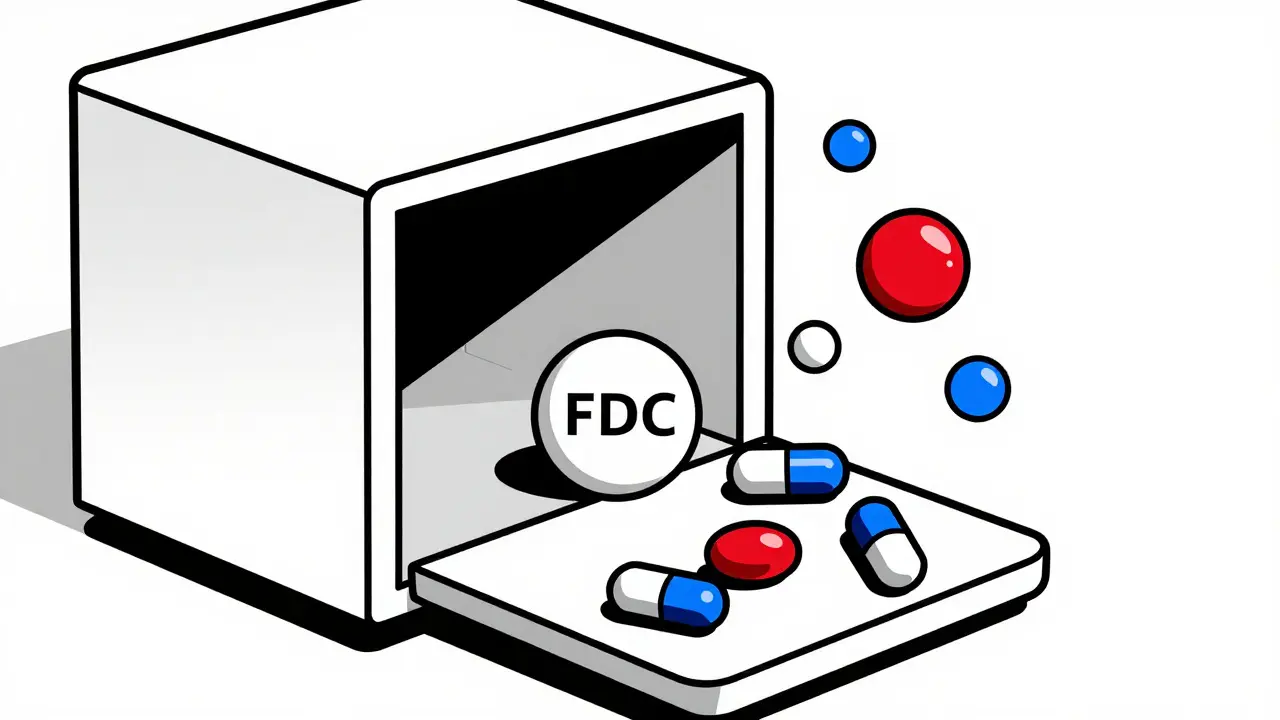
Think about your medicine cabinet. How many pills do you swallow each day? For people managing chronic conditions like high blood pressure, diabetes, or tuberculosis, it’s not uncommon to juggle five, six, or even more tablets. That’s where combination drugs come in - a single pill that packs two or more active ingredients. It sounds like a win: fewer pills, simpler routines, better adherence. But behind the convenience lies a complex trade-off. Are these multi-drug pills truly safer and smarter - or are they quietly increasing your risk?
Why Combination Drugs Exist
Combination drugs, also called fixed-dose combinations (FDCs), aren’t new. Traditional medicine systems like Traditional Chinese Medicine have used multi-herb formulas for centuries. But modern FDCs emerged in the 20th century as science caught up. The first rational combinations - like sulfamethoxazole and trimethoprim - were developed because doctors noticed they worked better together than alone. These weren’t random mixes. They were carefully chosen: one drug attacks bacteria in one way, the other in a different way. Together, they’re harder for bugs to resist.
Today, the World Health Organization includes 18 fixed-dose combinations in its Essential Medicines List. Why? Because in places with limited healthcare access, getting patients to stick to multiple pills is nearly impossible. A single pill that combines isoniazid, rifampicin, and pyrazinamide for tuberculosis treatment has been shown to dramatically improve cure rates. Studies show patients on FDCs are more likely to finish their full course. That’s huge - incomplete antibiotic courses are a leading cause of drug-resistant infections.
The Real Benefits: Less Burden, Better Outcomes
For someone with hypertension, taking three separate pills each morning is a hassle. One pill that combines a diuretic, an ACE inhibitor, and a calcium channel blocker? Much easier. A 2019 study found that patients on a single-pill combination for high blood pressure were 25% more likely to stick with their treatment than those on multiple pills. That’s not just about convenience - it’s about survival. Better adherence means lower blood pressure over time, fewer heart attacks, fewer strokes.
The same logic applies to Parkinson’s disease. Levodopa alone helps, but it breaks down fast and causes side effects. Add carbidopa, and the body absorbs levodopa more efficiently. Together, they’re a game-changer. In cancer, combination therapies are standard. Tumors evolve. One drug might kill 80% of cells. Add a second that targets the survivors, and you stop resistance before it starts. These aren’t just convenient - they’re medically necessary.
The Hidden Risks: When More Isn’t Better
But here’s the catch: not all combinations are created equal. The biggest problem? Irrational FDCs. These are pills that combine drugs with no proven benefit - or worse, ones that clash. In countries like India, regulators have banned over 300 such combinations in the last decade. Some included antibiotics with no clear synergy. Others mixed painkillers with muscle relaxants that didn’t belong together. The result? More side effects, more hospital visits, and rising antimicrobial resistance.
Take a common example: a combination pill that includes an antibiotic and a painkiller. If the patient doesn’t have a bacterial infection, the antibiotic does nothing - except encourage resistant bacteria to grow. The WHO calls this a global threat. And it’s not just antibiotics. Mixing drugs with overlapping side effects can be dangerous. For instance, combining two drugs that both lower blood pressure too much can lead to dizziness, falls, or fainting - especially in older adults.
Another issue: pharmacokinetics. That’s a fancy word for how your body absorbs, uses, and clears each drug. If one drug lasts four hours and the other lasts eight, forcing them into one pill means one is either underdosed or overdosed for part of the day. This isn’t theoretical. In real-world use, patients on certain FDCs report side effects that disappear when they switch back to individual pills.
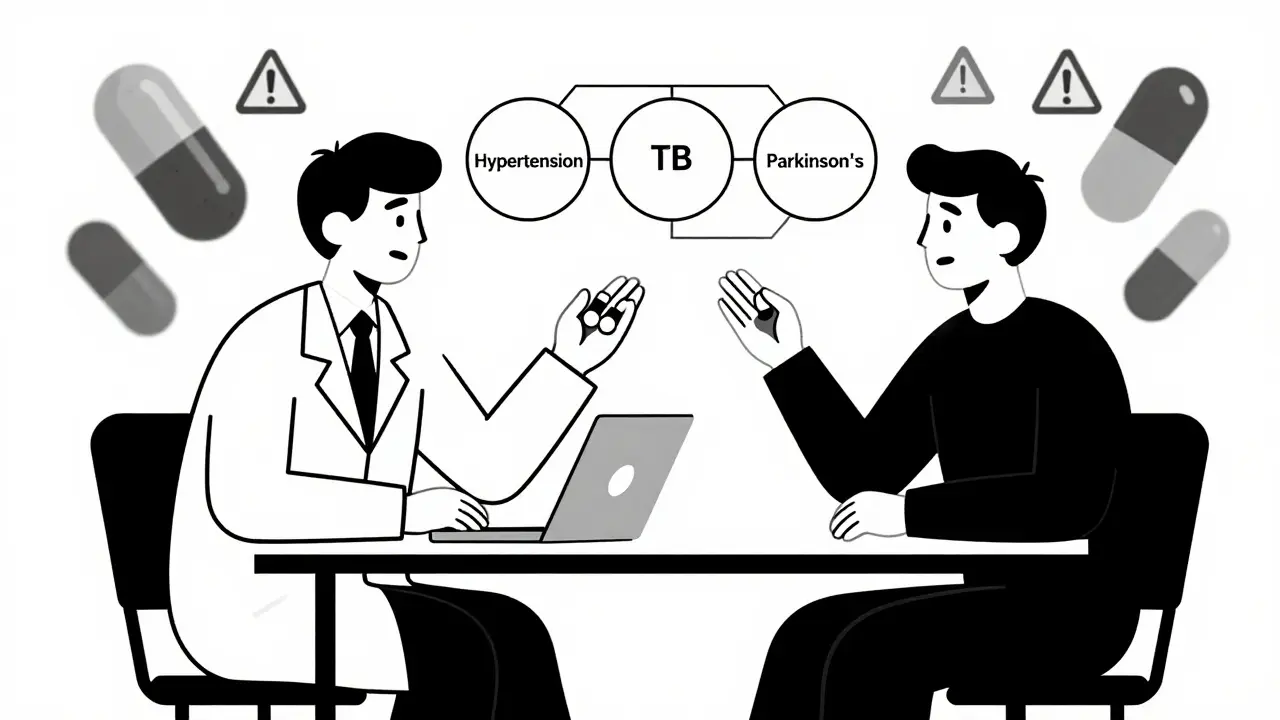
Loss of Flexibility: One Size Doesn’t Fit All
Imagine you’re on a combination pill for high blood pressure. It works great - until you develop kidney problems. Now, one of the ingredients becomes unsafe. But you can’t just reduce the dose of that one component. You have to stop the whole pill. Suddenly, you’re back to square one: figuring out which drugs to restart, at what doses, and how to space them out. This rigidity is why the American Association of Orthodontists and many clinicians argue FDCs limit personalized care.
Doctors can’t fine-tune treatment. If your blood pressure drops too low on the combination, you can’t just lower the diuretic. You have to switch to a completely different pill. That means more visits, more testing, more disruption. For patients with complex needs - like those with liver disease, allergies, or multiple chronic conditions - this inflexibility can be a dealbreaker.
Regulation: Who’s Watching?
The FDA doesn’t approve combination drugs the same way it approves single drugs. It treats them as unique products. That means the manufacturer must prove the combination itself is safe and effective - not just that each ingredient works alone. That’s good. But in some countries, oversight is weak. India’s drug regulator, CDSCO, has repeatedly banned irrational FDCs, yet new ones keep appearing on shelves. In the U.S., compounded medications (custom-mixed by pharmacies) are a different story. The FDA doesn’t review them before sale. So if your pharmacist mixes amitriptyline, gabapentin, and ketamine into a cream for nerve pain, there’s no guarantee it’s safe or stable. That’s a loophole some patients rely on - but it’s risky.

When FDCs Make Sense - and When They Don’t
Not all combination drugs are equal. Here’s how to tell the difference:
- Good FDCs: Backed by clinical trials, approved by major agencies (FDA, EMA, WHO), used for well-established conditions (hypertension, TB, HIV, Parkinson’s). Examples: Levodopa + Carbidopa is a fixed-dose combination used to treat Parkinson’s disease by enhancing dopamine delivery to the brain while reducing side effects, Rifampicin + Isoniazid is a tuberculosis treatment combination that targets different bacterial pathways to prevent drug resistance.
- Dangerous FDCs: Sold without strong evidence, common in markets with loose regulation, contain drugs with overlapping toxicity or no proven synergy. Examples: antibiotic + antipyretic combos without infection diagnosis.
Ask your doctor: Is this combination based on solid evidence? Or is it just convenient? If you’re on an FDC and start feeling worse - dizziness, rash, nausea - don’t assume it’s "just adjusting." It might be the combination itself.
The Future: Smarter Combinations, Tighter Rules
AI is now helping researchers find new rational combinations. Companies are using machine learning to predict which drug pairs work best together - not just for common diseases, but for rare cancers and autoimmune disorders. These aren’t random mixes. They’re data-driven, tested in labs, and designed to hit multiple disease pathways at once. That’s the future: smarter, safer, scientifically grounded combinations.
Meanwhile, regulators are waking up. The WHO plans to update its Essential Medicines List in 2025, likely adding more evidence-based FDCs and removing outdated ones. The FDA is tightening its review process. But patients still need to stay alert. Just because a pill is sold as a "combination" doesn’t mean it’s smart.
What You Should Do
- If you’re on a combination drug, know what’s in it. Ask for a list of active ingredients.
- Don’t assume more drugs = better. Ask if the combination is proven to work better than separate pills.
- If you have side effects, talk to your doctor - don’t just stop taking it.
- Be wary of combination pills marketed aggressively online or in countries with weak drug regulation.
- For chronic conditions, ask if there’s a single-pill option with proven outcomes - and if not, why not?
Combination drugs can be powerful tools. But they’re not magic. They’re medicines - and like all medicines, they come with trade-offs. The key isn’t to avoid them. It’s to understand them.
Are combination drugs safer than taking pills separately?
It depends. For well-studied combinations like those for hypertension, tuberculosis, or Parkinson’s, yes - they’re often safer because they improve adherence and reduce the risk of missed doses. But for irrational or poorly tested combinations, they can be riskier. Mixing drugs with overlapping side effects or incompatible dosing schedules can lead to more adverse reactions than taking the drugs separately.
Can I adjust the dose of one drug in a combination pill?
No. Fixed-dose combinations have a set ratio of ingredients. If your doctor needs to change the dose of one drug - say, lower the blood pressure component because you’re getting dizzy - you’ll need to switch to separate pills or a different combination. This lack of flexibility is one of the biggest downsides of FDCs.
Why are some combination drugs banned in certain countries?
Many countries, especially in Asia and Africa, have seen a flood of unregulated FDCs that combine drugs with no proven benefit - like antibiotics with painkillers. These don’t improve outcomes, increase side effects, and fuel antimicrobial resistance. Regulators like India’s CDSCO have banned hundreds of these irrational combinations to protect public health.
Do combination drugs cause more drug interactions?
Yes, potentially. The more active ingredients in a single pill, the more chances there are for interactions with other medications, supplements, or even foods. For example, combining a blood thinner with a common painkiller in one pill raises the risk of bleeding. That’s why doctors need to review all your medications when prescribing an FDC.
What’s the difference between combination drugs and compounded medications?
Combination drugs are mass-produced, FDA-approved products with fixed doses. Compounded medications are custom-made by pharmacists for individual patients - like a cream with five ingredients for nerve pain. The FDA doesn’t review compounded drugs before sale, so their safety and consistency aren’t guaranteed. FDCs are regulated; compounding is not.
Angie Datuin
February 8, 2026 AT 15:28My mom’s on a combo pill for BP and diabetes, and honestly? It changed her life. She used to forget half her meds, now she just takes one in the morning with her coffee. No more pill organizer chaos. I know it’s not perfect, but sometimes convenience saves lives.
Camille Hall
February 10, 2026 AT 03:40As someone who works in public health, I’ve seen how FDCs reduce dropout rates in TB programs - especially in rural areas where people travel hours for a clinic. One pill means one less barrier. But you’re right - we need better global regulation. Too many unapproved combos are still sold as "miracle cures" in informal markets.
Ritteka Goyal
February 12, 2026 AT 00:05USA always overthinks everything lol. In India we’ve been using combo pills for decades and guess what? People are alive and well. Why do you think WHO lists them? Because they WORK. All this fear about "irrational combos" is just pharma lobbying disguised as science. We had 300 banned? Good! We banned more than that last year too. Stop being paranoid. My uncle takes his TB combo and works 12-hour shifts - no side effects. You Americans need to chill.
Monica Warnick
February 13, 2026 AT 08:52I had a combo pill for anxiety and it made me feel like a zombie. Like, full-on dissociation. I switched back to separate meds and boom - I’m human again. Why isn’t this common knowledge? Why do doctors just push these things? I think it’s because they’re cheaper to prescribe. And don’t even get me started on the marketing. It’s all about profit. Always.
Ashlyn Ellison
February 13, 2026 AT 09:56My doc switched me to a combo for hypertension. Took me 3 pills down to 1. No more nausea. No more confusion. Just… easier. I didn’t even realize how much mental energy I was spending on pill schedules until it was gone. Sometimes simple is smarter.
Jonah Mann
February 14, 2026 AT 12:56Y’all need to stop calling them "FDCs" like it’s a acronym for something fancy. It’s just a pill with two drugs. And yeah, some are dumb - like that antibiotic + painkiller combo that’s still sold in some states. But the good ones? Like for HIV or Parkinson’s? Life-saving. Also - side note - if you’re on a combo and get dizzy, don’t just blame the pill. Check your potassium. Seriously. I’m a nurse. I’ve seen it.
Tricia O'Sullivan
February 16, 2026 AT 03:38It is imperative to distinguish between evidence-based fixed-dose combinations and those introduced without rigorous clinical validation. The regulatory divergence between jurisdictions - such as the FDA’s stringent requirements versus the more permissive frameworks in certain emerging economies - presents a significant public health challenge. We must advocate for harmonized global standards to ensure patient safety.
Tatiana Barbosa
February 17, 2026 AT 02:40Combination drugs = game changer for chronic care. Period. End of story. You think it’s hard managing 6 meds? Try doing it while working two jobs, raising kids, and not having a car. FDCs aren’t just convenient - they’re equity tools. And yes, some combos are sketchy - but the solution isn’t to panic. It’s to demand better science, not less access. Let’s stop vilifying the tool and start fixing the system.
MANI V
February 18, 2026 AT 17:31Why do you think Americans are so scared of combination pills? Because they’ve been sold lies for decades. Pharma companies don’t want you to know that single pills are more profitable. They push combos when it’s convenient for them - not you. And don’t get me started on how doctors get kickbacks for prescribing them. You think your doctor cares about your health? Or do they care about their bonus? Wake up. This isn’t medicine. It’s a business.
Simon Critchley
February 19, 2026 AT 11:04LOL at the "rational FDCs" narrative. I’ve read the papers. The real reason combos exist? Pharmacokinetic synergy + patient adherence = higher ROI for pharma. It’s not magic. It’s math. And yeah, some combos are brilliant (like ART for HIV) - but most? Just repackaged profit. Also - emoticon time 🤔💊 - ever notice how combo pills always look like they’re trying too hard to be cute? Like they’re a TikTok trend.
Karianne Jackson
February 21, 2026 AT 00:00I took a combo pill and it made my skin break out. Like, full-on rash. I quit. Now I’m back to 3 pills. I’d rather take 3 pills and not look like a zombie than 1 pill and look like a science experiment gone wrong.
Andrew Jackson
February 22, 2026 AT 06:31The very notion of combining pharmacological agents into a single entity reflects a dangerous erosion of individualized therapeutic precision. Medicine, at its core, must remain a bespoke art - not a mass-produced commodity. To reduce human physiology to a formula is to abandon the sanctity of the patient-doctor relationship. This is not progress - it is mechanization.
John Watts
February 23, 2026 AT 13:42As someone who’s lived in 5 countries, I’ve seen combo pills save lives in rural India and nearly kill people in the U.S. because of bad regulation. The answer isn’t to ban them - it’s to fix oversight. Teach people how to read labels. Demand transparency. Support regulators who do their job. And stop letting corporations decide what’s safe.
Tori Thenazi
February 25, 2026 AT 09:48Wait… so you’re telling me the government and Big Pharma are teaming up to put chemicals in our pills so they can track us through our medication use? I’ve been reading about this - they’re using nano-chips in combo pills to monitor our brainwaves. That’s why they don’t want you switching back to single pills - they need the data. And don’t forget: the WHO is secretly funded by Gates and Pfizer. I’ve got documents.