Dialysis Access: Fistulas, Grafts, and Catheter Care Explained
When someone needs hemodialysis to filter waste from their blood, the success of every treatment starts with one thing: the access point. Think of it like a highway into your bloodstream - if it’s not built right, everything else gets stuck. There are three main ways to create this highway: an AV fistula, an AV graft, or a central venous catheter. Each has its own pros, cons, and care rules. Knowing which one you have - and how to protect it - can mean the difference between months of complications and years of smooth dialysis.
Why AV Fistulas Are the Gold Standard
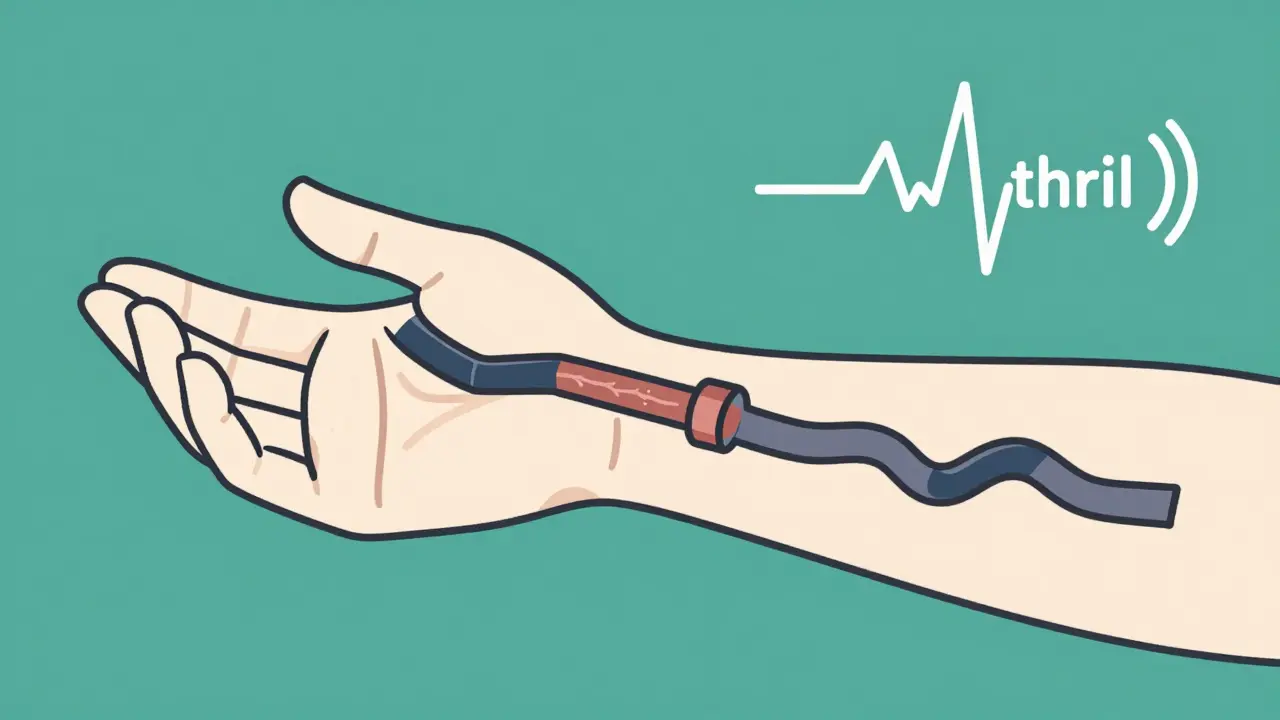
An arteriovenous (AV) fistula is when a surgeon connects an artery directly to a vein, usually in your forearm. This isn’t just a simple stitch - it’s a rebuild. The artery’s high-pressure blood rushes into the vein, forcing it to grow bigger and stronger over time. That’s called maturation, and it takes 6 to 8 weeks. Once it’s ready, nurses can stick needles into it safely, every other day, without damaging the vessel. Why is this the best option? Because it lasts. A well-cared-for fistula can work for decades. It has the lowest risk of infection, the least chance of clotting, and the fewest hospital visits. According to the National Kidney Foundation, fistulas are linked to fewer deaths than any other access type. Studies show that people on dialysis with a fistula have 18% lower risk of dying compared to those with a graft, and over 50% lower risk than those using a catheter. You might hear doctors say, “Fistula first.” That’s not just a slogan - it’s backed by data. The Fistula First Breakthrough Initiative, started in 2003, pushed hospitals to use fistulas whenever possible. Back then, only 32% of dialysis patients had them. Today, over 65% do. That’s a huge shift - and it saved lives. But not everyone can get one. If your veins are too small, too weak, or scarred from past IVs, a fistula might not work. That’s where vein mapping comes in. Before surgery, an ultrasound checks your blood vessels. If they’re not up to the task, you’ll need another option.AV Grafts: The Backup Plan
When a fistula isn’t possible, an AV graft is the next best thing. Instead of connecting your own artery and vein, a synthetic tube - usually made of PTFE (a tough plastic) - is placed between them. This tube acts like a bridge. Because it’s artificial, it doesn’t need to mature like a fistula. You can start dialysis through it in just 2 to 3 weeks. But grafts have downsides. They’re more likely to clot. About 30 to 50% of grafts need at least one procedure in their first year to clear blockages. They’re also more prone to infection than fistulas. That’s why they usually last only 2 to 3 years before needing replacement. Patients with grafts often report more hospital trips. One man in Bristol told his nurse, “I’ve had three interventions in 18 months. My graft keeps clogging.” That’s not unusual. Grafts are reliable, but they’re not low-maintenance. Regular check-ups and strict hygiene are non-negotiable. Still, grafts are a lifeline. For someone with poor veins, they’re the only way to avoid long-term catheter use. And unlike catheters, grafts don’t sit in your chest or neck - they’re in your arm, so you can move freely, shower normally, and sleep without worrying about pressure.Catheters: Temporary, But Sometimes Permanent
A central venous catheter is a soft tube inserted into a large vein - usually in the neck, chest, or groin. It’s the only access that works immediately. That’s why it’s used when someone needs dialysis right away and doesn’t have time to wait for a fistula to mature. But here’s the problem: catheters are the riskiest option. Every time you use one, you’re risking infection. Bloodstream infections from catheters are 2.1 times more likely than with a fistula. And those infections can be deadly. Studies show catheter use leads to 28 extra fatal infections per 100,000 patient-years compared to fistulas. Catheter care is intense. You can’t shower normally. You have to cover the site with waterproof dressing every time. You can’t swim. You have to check for redness, swelling, or drainage every day. Even then, infections still happen. About 0.6 to 1.0 infections occur per 1,000 catheter days. Some people end up on catheters long-term because their veins are too damaged for a fistula or graft. But that’s not ideal. Hospitals are pushing hard to reduce long-term catheter use. The goal is to get everyone onto a fistula or graft as soon as possible.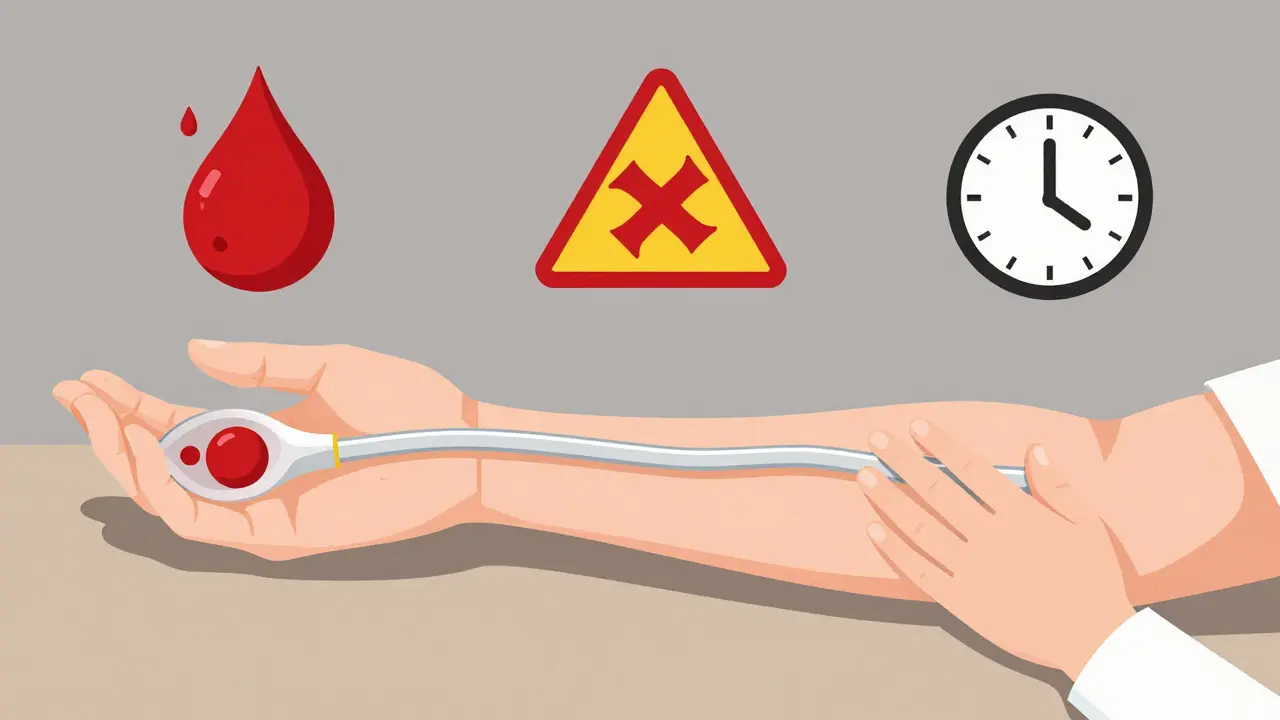
How to Care for Your Access
No matter which access you have, daily care makes all the difference. For a fistula, check for the “thrill” every day - that’s the vibration you feel when blood flows through it. If it’s gone, call your dialysis center. Wash your arm with soap and water before every treatment. Never let anyone take your blood pressure or draw blood from that arm. Avoid tight clothing or sleeping on that side. For a graft, same rules apply: check for thrill, keep it clean, avoid pressure. But because grafts clot more easily, you may need to get a blood flow test every few months. Some centers now use wireless sensors - like the FDA-approved Vasc-Alert - that monitor flow in real time and alert you to early problems. For a catheter, it’s all about sterility. Wash your hands before touching it. Change the dressing exactly as your nurse taught you - usually every 3 days or if it gets wet or dirty. Watch for signs of infection: redness, pus, fever, or swelling. Never let anyone pull on the tube. If it gets loose or falls out, go to the hospital immediately. Education matters. Patients who get proper training before their first dialysis session have 25% fewer complications in their first year. That’s not magic - it’s knowing what to look for and when to act.What’s New in Dialysis Access
The field is changing fast. Researchers are finding ways to make fistulas work better. One study showed that patients who did light arm exercises before surgery had 15 to 20% higher maturation rates. That’s huge - especially for older adults or people with diabetes. New graft materials are being tested too. A bioengineered vessel called Humacyte’s human acellular vessel is in phase 3 trials. It’s made from donated human tissue, stripped of cells, and then grown into a strong, flexible tube. Early results show it resists clotting better than current grafts. And monitoring tech is getting smarter. Wireless sensors now track blood flow without needles. They alert you if flow drops - before a clot forms. That’s a game-changer for preventing emergency blockages.
Who Gets Left Behind?
Despite progress, disparities remain. Black patients are 30% less likely to get a fistula than White patients, even when their health is similar. Why? Access to specialists, delays in referrals, or even unconscious bias in care. These aren’t medical issues - they’re system issues. The cost difference is stark too. Replacing catheters with fistulas could save the U.S. healthcare system over $1.1 billion a year. That’s because catheters lead to more hospitalizations, longer stays, and more antibiotics. The future of dialysis access isn’t just about better tubes - it’s about fair access. Everyone deserves the safest, longest-lasting option - not just those who can jump through the right hoops.What to Do Next
If you’re preparing for dialysis:- Ask for vein mapping before any surgery - it’s non-invasive and tells you what’s possible.
- Push for a fistula if your veins allow it. Don’t accept a graft or catheter unless there’s a real reason.
- Start arm exercises early - even light squeezing of a stress ball can help.
- Get trained on access care. Ask for a nurse to show you how to check your thrill, clean your site, and spot trouble.
- Know your numbers: How many people at your center have fistulas? If it’s below 60%, ask why.
- Check your thrill daily. No excuses.
- Report any changes - swelling, pain, coldness, or loss of vibration - immediately.
- Keep your access site clean. Always.
- Don’t let anyone take your blood pressure or IVs on that arm.
- Stay informed. New tech is coming. Ask your care team what’s available.
Frequently Asked Questions
Can I shower with a dialysis fistula?
Yes, you can shower with a fistula once it’s healed. After surgery, your care team will tell you when it’s safe to get it wet - usually after a few days. Once healed, no special covering is needed. Just wash gently and dry well. The key is to avoid scrubbing or using harsh soaps directly on the access site.
Why can’t I use my arm with a fistula for blood pressure or IVs?
Blood pressure cuffs squeeze your arm tightly - that pressure can damage the fistula’s delicate walls. IVs in the same arm can cause scarring or blockages. Even one bad IV can ruin your access. Always use the opposite arm for blood pressure, blood draws, and IVs. Your care team should mark your arm with a wristband to remind everyone.
How do I know if my fistula is working?
Feel for the “thrill” - a gentle vibration like a purring cat - over the fistula site every day. If it’s gone, weak, or changes suddenly, call your dialysis center. Also, look for a visible bulge or pulsing vein. If you can’t feel or see anything, it might be clotting. Don’t wait - early action saves the access.
Can a graft turn into a fistula?
No, a graft cannot become a fistula. A graft is a synthetic tube, while a fistula is your own vein and artery connected. Once you have a graft, you can’t switch to a fistula without removing the graft and doing a new surgery. But if your veins improve over time, you might be able to replace the graft with a fistula later - that’s a common plan for younger patients.
Is it true that catheters cause more infections?
Yes, and it’s serious. Catheters sit inside large veins and are exposed to the outside environment every time they’re used. That makes them easy targets for bacteria. Studies show catheter-related bloodstream infections are 2.1 times more common than with fistulas. They’re also the leading cause of hospitalization and death in dialysis patients. That’s why every effort is made to replace them with a fistula or graft as soon as possible.
Kevin Y.
March 24, 2026 AT 15:35One thing I'd add: patients who start dialysis with a fistula in place report significantly better quality of life. No catheter tapes, no anxiety over showers, no fear of infection. It’s freedom.
Caroline Bonner
March 26, 2026 AT 02:09Also, the part about arm exercises? My cousin started doing wrist curls with a water bottle every morning. Her fistula matured faster than expected. Small habits. Big impact. Please share this with everyone you know.
Zola Parker
March 28, 2026 AT 00:08And don't get me started on 'vein mapping.' I had mine done. The tech said 'your veins look like old garden hose.' So now I'm stuck with a graft that clogs every 3 weeks. Great job, system.
Aaron Sims
March 29, 2026 AT 01:13And why are Black patients less likely to get fistulas? Because the system doesn't want them to. They're easier to manage as long-term catheter patients. More billing codes. More profit.
Wake up. This isn't medicine. It's a racket.
Rama Rish
March 30, 2026 AT 18:45no catheter for me. never again.
Kevin Siewe
March 31, 2026 AT 11:57This isn’t theoretical. This is real.
If you’re reading this and you’re about to start dialysis - please, please, please advocate for a fistula. Ask for vein mapping. Ask for a referral to a vascular surgeon. Don’t let anyone tell you it’s too late.
James Moreau
April 1, 2026 AT 23:25But I want to say - this article is one of the clearest summaries I’ve seen. Thank you. I’m sharing it with our community outreach team.
Seth Eugenne
April 2, 2026 AT 19:47Every morning I check for the thrill. Every night I wash it gently. I don’t let anyone touch that arm. Not even my wife.
It’s not glamorous. But it’s mine. And it’s kept me alive.
Thank you for writing this. I wish everyone could read it.
Brandon Shatley
April 4, 2026 AT 07:24now im doing wrist squeezes with a tennis ball. feels weird but i guess its helping. anyone else doing this?
Rachele Tycksen
April 6, 2026 AT 00:04Anil Arekar
April 6, 2026 AT 20:25This article is accurate, but it assumes a system that works. In reality, the system is broken - and it breaks the poor first.
We must demand equity. Not just better tubes. Better justice.
Chris Crosson
April 7, 2026 AT 04:27Katie Putbrese
April 7, 2026 AT 12:59My cousin had a fistula. It got infected. They took her arm. Now she's on a catheter. So much for 'gold standard.'
Who's really behind this? Who profits?
Korn Deno
April 7, 2026 AT 16:42You're not just connecting an artery to a vein. You're reconnecting yourself to your body. To your future. To your dignity.
The catheter is a reminder of dependency. The graft is a compromise. The fistula is a promise - that you can still live.
Linda Foster
April 8, 2026 AT 09:30