How Age Affects Medication Side Effects and Tolerability in Older Adults
Medication Safety Checker for Older Adults
This tool checks if a medication might be risky for people over 65 based on age-related body changes and the Beers Criteria. It analyzes how your body processes drugs differently as you age.
When you’re 80, a pill that once helped you sleep might leave you confused, dizzy, and at risk of falling. A blood pressure medicine that worked fine at 50 could drop your pressure too low when you stand up, causing a hospital trip. This isn’t rare - it’s normal. As we age, our bodies change in ways that make medications behave differently, often with dangerous results. Older adults aren’t just smaller versions of younger people when it comes to drugs. They’re a different system entirely - and treating them like one can be deadly.
Why Older Bodies Handle Drugs Differently
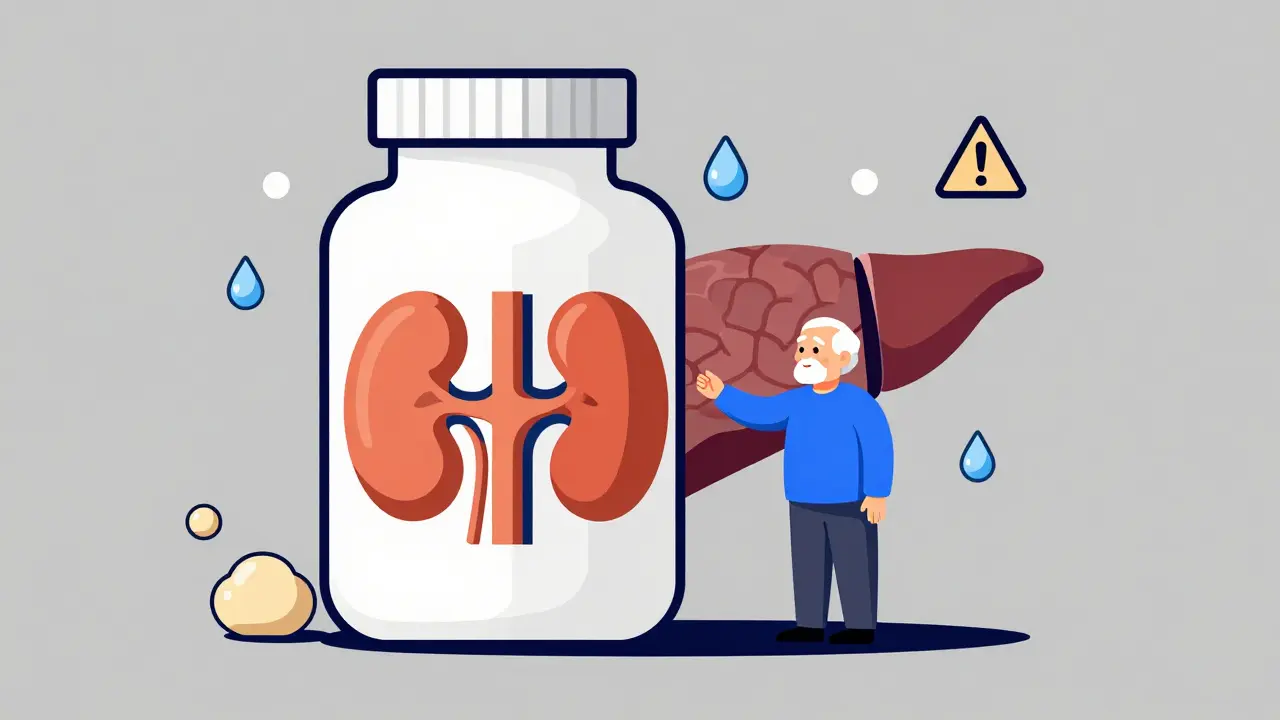
Your body doesn’t just slow down as you age - it rewires how it deals with medicine. Two big things happen: how your body moves drugs around (pharmacokinetics) and how your body reacts to them (pharmacodynamics) both shift dramatically. Take body composition. Between ages 25 and 80, total body water drops by about 15%. At the same time, body fat climbs - from 25% to 40% in men, and 35% to 48% in women. That means water-soluble drugs like lithium or digoxin become more concentrated in your blood because there’s less water to dilute them. Fat-soluble drugs like diazepam or amitriptyline stick around longer because they get stored in fat tissue and released slowly. One dose can last days instead of hours. Your kidneys also start to fail quietly. Glomerular filtration rate - the measure of how well your kidneys filter blood - drops by about 0.8 mL/min/1.73m² every year after 40. By 80, many people have lost 30-50% of their kidney function. Drugs like warfarin, digoxin, and certain antibiotics are cleared through the kidneys. If those organs aren’t working well, those drugs build up. A standard dose becomes a toxic one. The liver, which breaks down many medications, isn’t far behind. Blood flow to the liver drops 20-40% between ages 25 and 65. That means drugs like propranolol, verapamil, and some antidepressants aren’t broken down as fast. They hang around longer, increasing side effects. At the same time, protein levels in the blood - especially albumin - fall by 10-15%. That’s bad news for drugs like warfarin or phenytoin that cling tightly to proteins. Less protein means more free, active drug floating around, even if the total dose hasn’t changed. Then there’s the brain. Older adults are far more sensitive to drugs that affect the central nervous system. A dose of diazepam that causes mild drowsiness in a 30-year-old can cause severe confusion, memory loss, and falls in someone over 75. The same plasma level produces 50% more sedation. That’s not a coincidence - it’s biology.Drugs That Are Riskier After 65
Some medications are simply too dangerous for older adults, no matter the dose. The Beers Criteria is a regularly updated list of medications that pose high risks to adults over 65 due to their potential for severe side effects identifies 56 drugs to avoid or use with extreme caution. These aren’t obscure drugs - many are still prescribed daily. Anticholinergics like diphenhydramine (Benadryl), oxybutynin, and even some sleep aids and antidepressants are a major problem. They block acetylcholine, a brain chemical critical for memory and attention. In older adults, this leads to delirium, confusion, and memory loss. A 2023 University of Florida study found that people over 75 taking these drugs were 4.2 times more likely to experience delirium than younger adults. Benzodiazepines - including lorazepam, alprazolam, and zolpidem - are another red flag. They increase fall risk by 2-3 times. Zolpidem causes 80% more next-day impairment in people over 65. Even “safe” doses can leave you groggy, unsteady, and prone to breaking a hip. And once you fall, recovery is harder. One fall can mean loss of independence. NSAIDs like ibuprofen and naproxen are common, but dangerous. They raise the risk of stomach bleeding, kidney damage, and heart failure in older adults. A 2022 JAMA study showed that even short-term use increased hospitalization risk by 40% in people over 75. And then there’s warfarin. While it’s still used, it requires much lower doses in older adults. Their bodies metabolize it slower, and their blood vessels are more fragile. INR levels - the measure of blood thinning - become unstable in 35% of seniors, compared to just 15% in younger people. A tiny change in diet or another drug can push them into dangerous bleeding territory.How Polypharmacy Makes Everything Worse
The average older adult takes five or more prescription drugs. Nearly 21% take 10 or more. This isn’t just about having multiple conditions - it’s about drug interactions piling up. Each new medication adds risk. One drug might slow down the liver’s ability to break down another. A third might increase potassium levels, which a fourth drug already raises. The result? A cascade of side effects that look like new diseases: fatigue, confusion, constipation, dizziness. A 2022 JAMA study found that patients over 65 who took five or more medications had a 50% higher risk of a serious adverse drug event. The more pills, the higher the chance one of them is doing more harm than good. And many of these drugs were never meant to be taken long-term. A proton pump inhibitor for occasional heartburn becomes a daily habit. A sleep aid for a bad night turns into a nightly crutch. Antidepressants started after a loss linger for years, even when depression has lifted. This is where deprescribing is the intentional process of reducing or stopping medications that are no longer beneficial or are causing harm comes in. It’s not about stopping everything - it’s about asking: “Is this still helping? Or is it just adding risk?”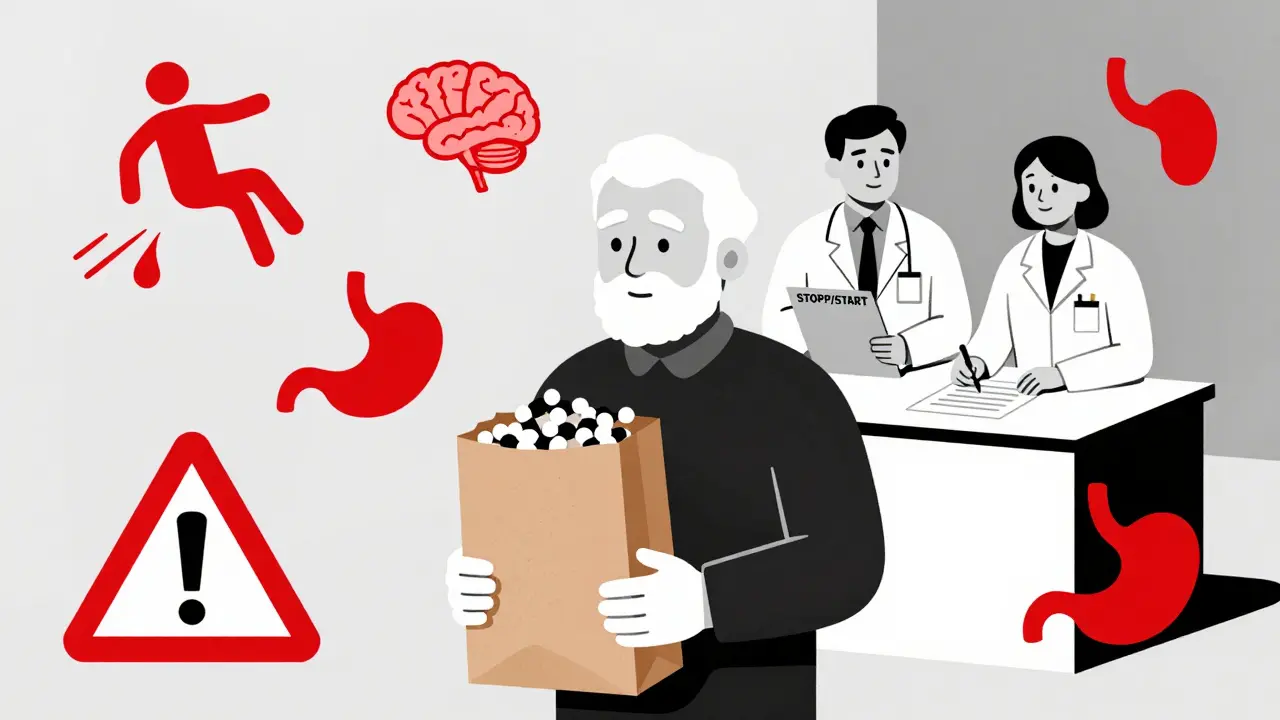
Real Stories, Real Consequences
Behind every statistic is a person. One Reddit user, 78, started amitriptyline for nerve pain. Within three days, he couldn’t urinate. He needed a catheter. The drug, common in younger patients, caused severe urinary retention - a known side effect, but rarely discussed with older men. Another woman, 82, was on the same blood pressure dose her doctor used for 50-year-olds. She got dizzy standing up. One morning, she fell and broke her hip. Her doctor hadn’t checked for orthostatic hypotension - a drop in blood pressure on standing - which affects 28% of people over 80, compared to just 9% of those aged 50-65. A 2022 survey of 1,200 seniors found that 68% had experienced dizziness or falls linked to meds. 54% reported memory problems. 41% had unexplained weight loss or gain. And 45% admitted they’d stopped taking a drug because the side effects were worse than the condition it treated. These aren’t isolated cases. They’re the norm.What Doctors and Pharmacists Should Be Doing
The solution isn’t to stop giving medicine - it’s to give it smarter. The STOPP/START criteria are evidence-based guidelines that help clinicians identify potentially inappropriate medications (STOPP) and missing but needed ones (START) in older adults are now used in hospitals across the U.S. and Europe. They help spot drugs like anticholinergics, benzodiazepines, and NSAIDs that should be avoided - and flag things like bone density drugs or statins that are often missed. Every older adult on multiple meds should get a Brown Bag Review a process where patients bring all their medications - including over-the-counter and supplements - to a healthcare provider for a full review. Pharmacists do this regularly. In one study, they found an average of 3.2 medication errors per patient - from duplicates to dangerous interactions to drugs no longer needed. Dosing needs to change. For kidney-cleared drugs, start at 25-50% of the standard adult dose. Use eGFR (not just creatinine) to assess kidney function. Avoid drugs with strong anticholinergic effects. Always ask: “Would I prescribe this if this patient were 25?” And if the answer is no - stop it.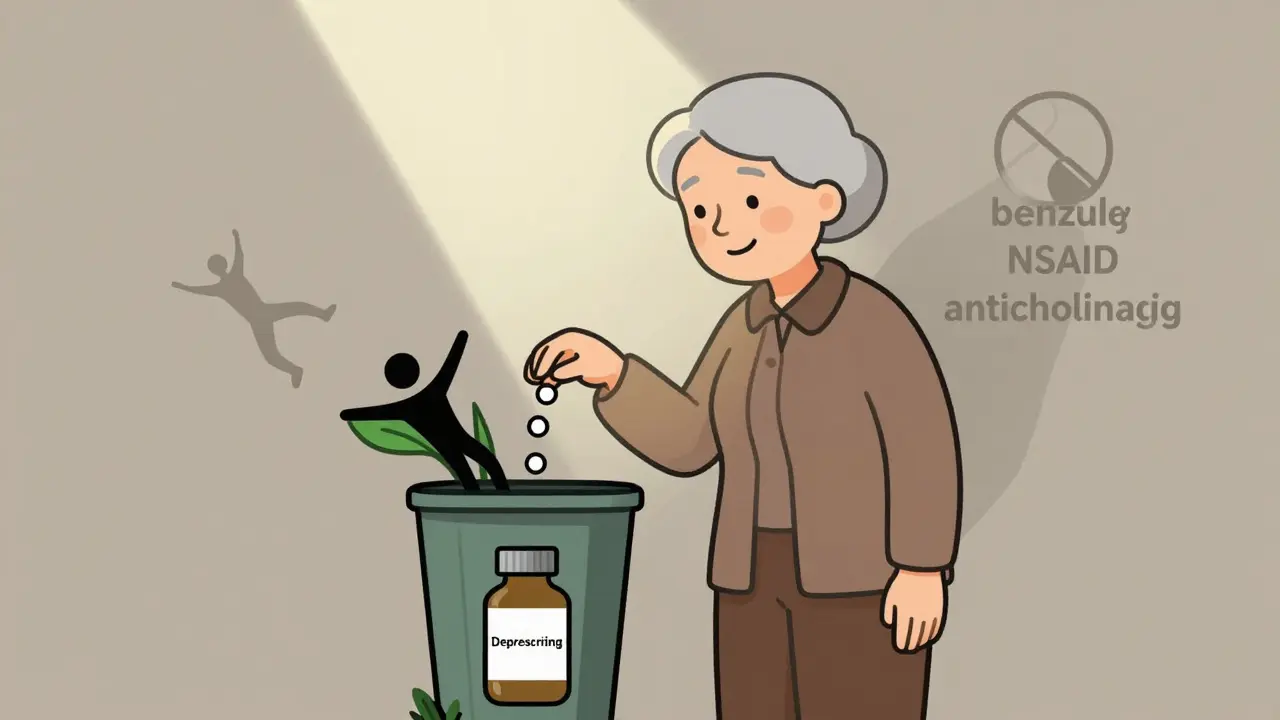
What You Can Do as a Patient or Caregiver
You don’t have to wait for your doctor to bring it up. Be proactive. - Bring all your pills - every bottle, every supplement, every OTC medicine - to your next appointment. Don’t trust your memory. - Ask: “Is this still necessary? Could it be causing my dizziness or confusion?” - Ask about deprescribing. Say: “I’m worried about taking too many pills. Can we review what’s still helping?” - Know the signs: new dizziness, confusion, constipation, falls, urinary problems, or unexplained weight loss. These aren’t just aging - they could be drug side effects. - Use the Beers Criteria app. It’s free, updated annually, and available to the public. Search for any drug you’re taking and see if it’s flagged for seniors. - If you’ve been on a drug for more than a year without a review - ask for one. The goal isn’t to avoid all meds. It’s to make sure every pill you take is still worth the risk.The Bigger Picture: Why This Matters Now
By 2040, nearly 1 in 5 Americans will be over 65. Right now, preventable drug reactions cost the U.S. $30 billion a year. That’s 15% of all medication spending for older adults. Hospitals are being penalized for readmissions linked to medication errors in seniors. Medical schools are finally teaching geriatric pharmacology. The FDA is pushing for more older adults in clinical trials - a huge shift, since 90% of drug studies still exclude people over 75. New tools are emerging: AI systems like MedAware cut medication errors by 42%. Genetic testing for drug metabolism (like CYP2D6 and CYP2C19) is reducing side effects by 35% in seniors on antidepressants. But the biggest change isn’t tech - it’s mindset. We need to stop thinking of older adults as small young people. We need to treat them as a distinct population with unique biology. Medication safety for seniors isn’t about being careful. It’s about being intentional.Final Thought: Less Can Be More
The most powerful drug for an older adult might not be a pill at all - it might be the decision to stop one. A woman in her late 70s stopped taking three sleeping pills and two antihistamines. Within a week, her memory improved. Her balance got better. She stopped falling. Her doctor didn’t add anything. He just took things away. That’s the power of deprescribing. It’s not giving up. It’s choosing safety over routine. It’s recognizing that aging doesn’t mean more pills - it means smarter ones.Why do older adults have more side effects from medications?
As people age, their bodies change in ways that affect how drugs are absorbed, processed, and eliminated. Kidney and liver function decline, body fat increases and water decreases, and the brain becomes more sensitive to certain drugs. These changes mean that standard adult doses can become too strong, leading to dizziness, confusion, falls, and other serious side effects.
What are the most dangerous medications for seniors?
The Beers Criteria lists 56 medications to avoid or use with caution in adults over 65. The most dangerous include anticholinergics like diphenhydramine (Benadryl), benzodiazepines like lorazepam and zolpidem, NSAIDs like ibuprofen, and certain antipsychotics and heart medications. These drugs increase risks of confusion, falls, bleeding, kidney damage, and urinary retention.
What is deprescribing, and why is it important?
Deprescribing is the process of safely reducing or stopping medications that are no longer needed or are causing harm. It’s important because many older adults take drugs that were prescribed years ago for conditions that have changed or resolved. These drugs can cause more harm than benefit - especially when combined with other medications. Stopping unnecessary drugs can improve energy, memory, balance, and quality of life.
How can I tell if a medication is causing side effects in an older adult?
Watch for new or worsening symptoms like dizziness, confusion, memory loss, constipation, urinary problems, unexplained weight loss, or falls. These often appear shortly after starting a new drug or changing a dose. If any of these happen, don’t assume it’s just aging - talk to a doctor or pharmacist about whether the medication could be the cause.
Should older adults avoid all medications?
No. Many medications are essential and life-saving for older adults - like blood pressure drugs, statins, or insulin. The goal isn’t to stop all meds, but to make sure every one is still necessary and safe. Some drugs should be stopped, others adjusted, and some kept. The key is regular review and personalized care, not blanket avoidance.
Lisa Davies
December 16, 2025 AT 05:42Melissa Taylor
December 16, 2025 AT 10:24Jake Sinatra
December 16, 2025 AT 16:29John Brown
December 17, 2025 AT 11:36Christina Bischof
December 17, 2025 AT 12:25Jocelyn Lachapelle
December 17, 2025 AT 15:08Mike Nordby
December 18, 2025 AT 17:34Michelle M
December 20, 2025 AT 15:01Nupur Vimal
December 21, 2025 AT 13:36RONALD Randolph
December 22, 2025 AT 13:37Raj Kumar
December 22, 2025 AT 14:54Sai Nguyen
December 23, 2025 AT 01:54Cassie Henriques
December 23, 2025 AT 22:13