How Paragraph IV Patent Challenges Speed Up Generic Drug Entry
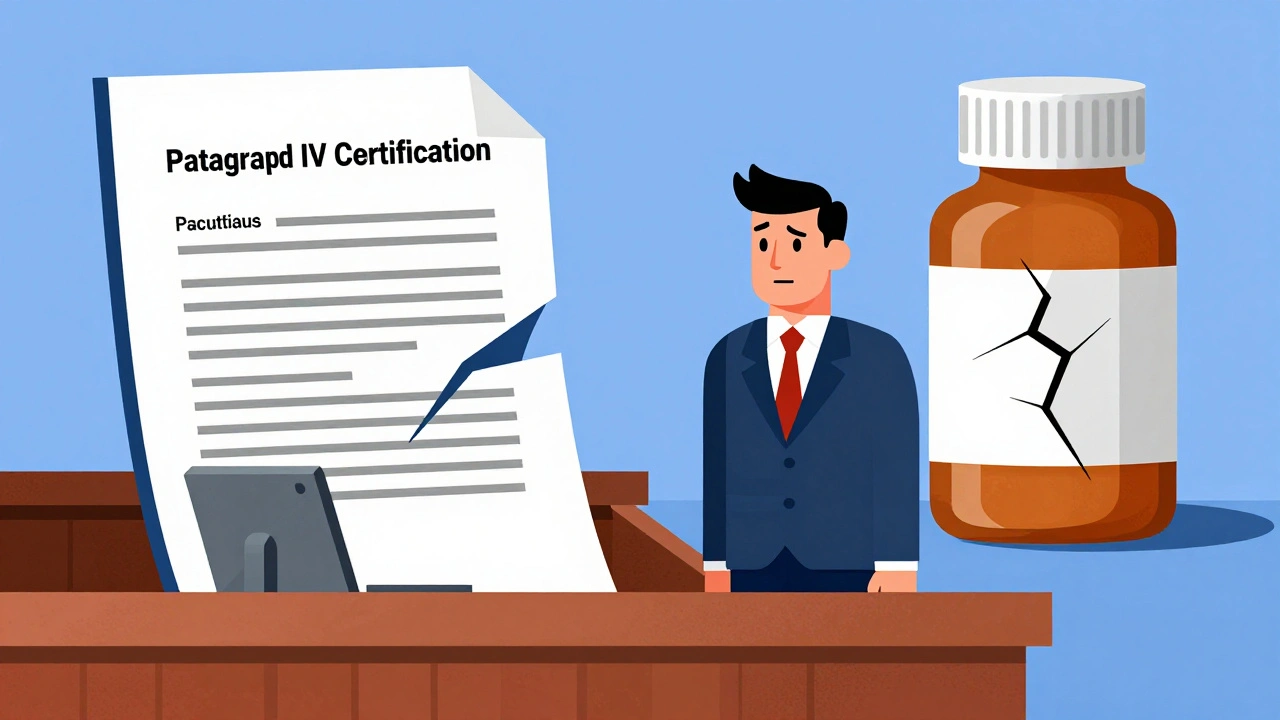
When a brand-name drug’s patent is about to expire, the real battle doesn’t start in a pharmacy-it starts in a courtroom. That’s where Paragraph IV certification comes in. It’s not a drug, not a regulation, not even a form. It’s a legal move made by generic drug companies to knock down patents and get cheaper versions to market faster. And it’s one of the most powerful tools in U.S. healthcare for lowering drug prices.
What Is Paragraph IV, Really?
Paragraph IV isn’t a law. It’s a clause inside the Hatch-Waxman Act of 1984, a piece of legislation designed to balance two competing goals: protecting innovation and making medicines affordable. Before this law, generic companies had to wait until every patent expired before they could even apply to sell their version. That meant patients paid high prices for years after the original drug’s invention. Paragraph IV lets a generic manufacturer file a certification with the FDA saying: "These patents are invalid, unenforceable, or we won’t infringe them." This isn’t just a claim. It’s a legal trigger. By filing this, the generic company commits what the law calls an "artificial act of infringement." That sounds odd, but it’s intentional. It forces the brand-name company to either sue-or let the generic enter the market. This system only applies to small-molecule drugs, not biologics. For biologics, there’s a different process under the BPCIA. But for pills and capsules? Paragraph IV is the main path to competition.The Step-by-Step Process
Here’s how it actually works, from start to finish:- The generic company picks a brand-name drug listed in the FDA’s Orange Book, which tracks all patents tied to approved drugs.
- They file an Abbreviated New Drug Application (ANDA) with a Paragraph IV certification. This isn’t a one-line statement. It must include detailed legal and scientific reasoning explaining why the patent doesn’t hold up-whether it’s obvious, already existed in prior art, or doesn’t cover their product.
- Within 20 days, they must send a formal notice to the brand-name company. This letter isn’t a friendly heads-up. It’s a legal demand.
- The brand company has exactly 45 days to sue for patent infringement. If they don’t, the FDA can approve the generic immediately.
- If they do sue, an automatic 30-month clock starts. During this time, the FDA can’t approve the generic, no matter how ready it is.
- The case goes to federal court. Judges hold Markman hearings to define the exact meaning of the patent’s claims. This often decides the whole case.
- If the generic wins, the FDA approves it right away. If the brand wins, the generic waits until the patent expires.
Why the 180-Day Exclusivity Matters
Here’s the kicker: the first company to file a successful Paragraph IV certification gets 180 days of exclusive rights to sell the generic version. No other generic can enter during that time. That’s not just a reward-it’s a massive financial incentive. During those six months, the first filer can charge 80-90% less than the brand drug but still make huge profits because they’re the only option. For example, when Barr Labs challenged Eli Lilly’s Prozac patent in 1996, they won and captured over 70% of the fluoxetine market during their exclusivity window. This exclusivity has driven fierce competition. In 2014, the FTC found that 87% of Paragraph IV filers were racing to be first. But it also created problems. Some companies file just to block others, even if they never plan to launch. Others form secret deals with brand companies to delay entry-so-called "pay-for-delay" agreements. The Supreme Court banned these in 2013, but they still happen in disguised forms.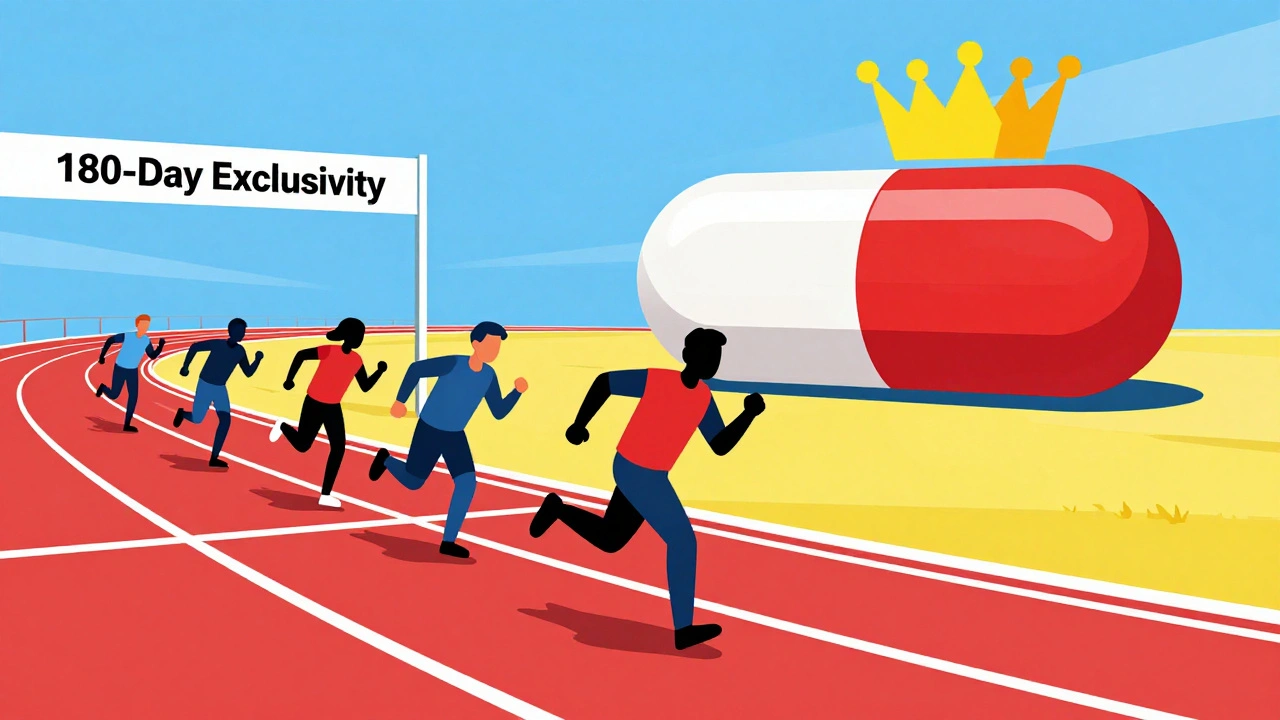
Who Wins? Who Loses?
The data shows Paragraph IV works-but not perfectly. Generic companies win about 65% of the time, according to a 2021 study of over 1,700 cases. That’s a high success rate, especially compared to patent challenges at the USPTO, which only succeed about 35% of the time. Why? Because in court, the burden of proof is lower. You don’t need to prove the patent is "clearly" invalid-you just need to show it’s more likely than not. But winning is expensive. The average Paragraph IV lawsuit costs $7.8 million. That’s more than three times the cost of a USPTO post-grant review. Generic companies often spend $2.3 million just preparing the filing, analyzing patents, and running lab tests to prove their product doesn’t infringe. Brand companies don’t go down easily. They’ve learned to file multiple patents on the same drug-on the formulation, the method of use, the dosage, even the packaging. In 2020, the average drug had 4.8 Orange Book patents. Back in 1984, it was 1.2. This is called "patent thicketing," and it’s designed to delay generics. Take Humira. AbbVie filed over 100 patents on it. Generic challengers kept losing. Even when they won one patent, another one popped up. The result? Humira stayed without competition for over 20 years.Settlements, Not Trials
Most cases never go to trial. In fact, 76% settle before reaching a judge. That’s because both sides know how costly and unpredictable litigation is. But settlements aren’t always fair. Sometimes, the brand company pays the generic to delay launch. That’s illegal under FTC v. Actavis. Still, some deals are disguised as "research funding," "distribution agreements," or "licensing deals." The FTC has cracked down, but proving these are pay-for-delay schemes is hard. The result? Many generics enter the market faster than they would without Paragraph IV-but slower than they should. The average litigation lasts 28.7 months, just under the 30-month stay. That means brand companies often get close to the full delay they want.Impact on Prices and Patients
When generics finally enter, prices drop fast. A 2019 study found that after a successful Paragraph IV challenge, drug prices fell by 79% within six months. That’s not a slow decline. That’s a crash. Between 2009 and 2019, these challenges saved U.S. consumers $1.68 trillion. In 2021 alone, 287 brand drugs lost patent protection thanks to Paragraph IV filings, opening the door to $98.3 billion in generic sales. Patients benefit most. Diabetics, heart patients, people on cholesterol meds-they all pay less because someone fought the patent in court. Without Paragraph IV, many of these drugs would still cost hundreds of dollars a month.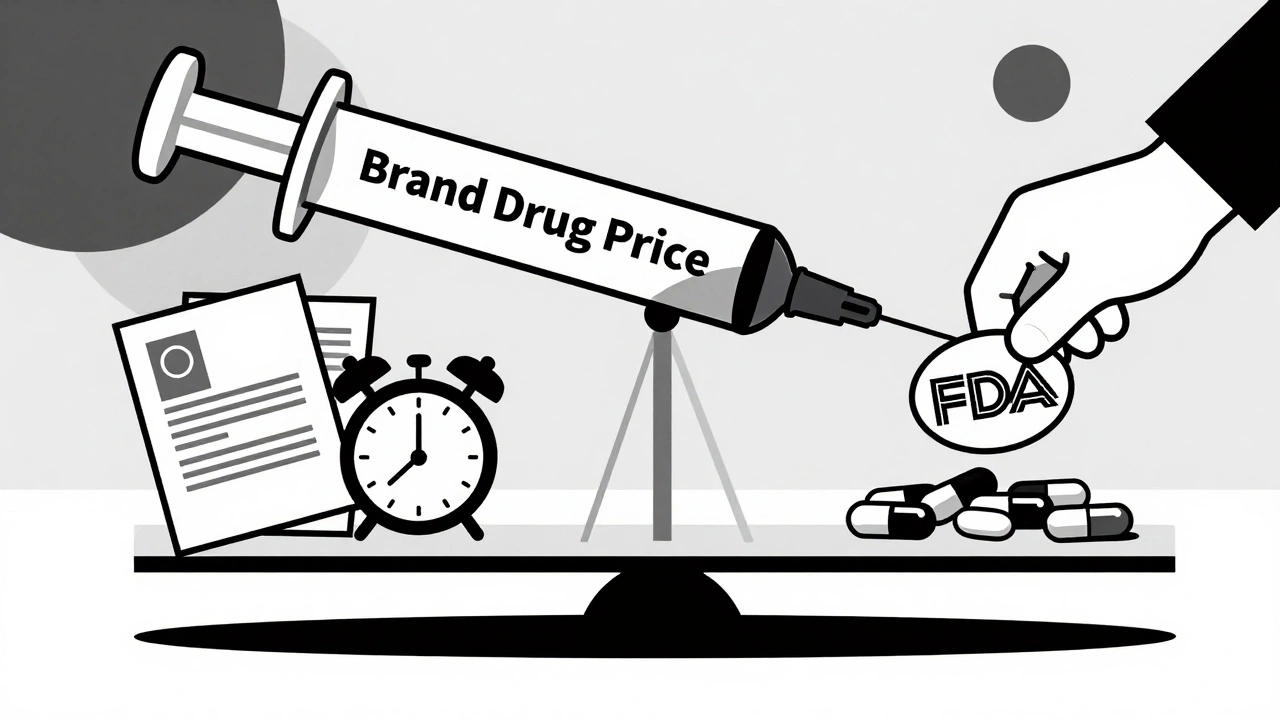
What’s Changing Now?
The system is under pressure. Brand companies are using every trick they can to delay generics:- Filing last-minute patents just before expiration.
- Blocking generic companies from getting samples needed for testing (a tactic the 2023 CREATES Act now forbids).
- Filing citizen petitions with the FDA to delay approval.
Why This System Is Unique to the U.S.
No other country has anything like Paragraph IV. In Europe, generics can’t even start the approval process until all patents expire. That means patients wait longer and pay more. The OECD found that generic entry in the U.S. happens, on average, 18 months faster than in the EU. That’s not an accident. It’s the result of deliberate policy. The U.S. chose to let generics challenge patents head-on. Other countries chose to wait. The trade-off? More lawsuits, more cost, more complexity-but also faster access to affordable medicine.Is the System Broken?
It’s not broken-it’s being stretched. The original goal of Hatch-Waxman was balance. But today, the scale is tilted. Brand companies now extend effective patent life from 12.1 years in 1995 to 14.7 years in 2022, according to the Congressional Budget Office. That’s not because of innovation. It’s because of legal maneuvering. Generic companies are forced to become legal and scientific detectives. They need lawyers, chemists, patent analysts, and financial risk-takers-all in one team. And patients? They’re still waiting. Even with Paragraph IV, some drugs stay expensive for years after their patents should have expired. The system works-but only if it’s used well. And right now, too many players are gaming it.What happens if a generic company loses a Paragraph IV lawsuit?
If the generic company loses, the FDA cannot approve its drug until the patent expires. The company may also face financial penalties, including damages for willful infringement. In one case, Mylan was ordered to pay $1.1 billion to Novartis after losing a challenge against Gleevec.
Can a generic company file a Paragraph IV certification on any drug?
No. The drug must be listed in the FDA’s Orange Book with at least one patent. Paragraph IV only applies to small-molecule drugs approved under an NDA. Biologics, over-the-counter drugs, and older drugs without listed patents are not eligible.
Why is the 30-month stay considered a big advantage for brand companies?
The 30-month stay automatically blocks FDA approval of the generic while litigation is ongoing. Even if the case drags on, the brand keeps its monopoly. The stay starts when the notice is received, not when the lawsuit is filed, giving brand companies control over timing. Many cases end just before the 30 months expire, maximizing the delay.
How does Paragraph IV differ from a patent challenge at the USPTO?
Paragraph IV challenges happen in federal court with a lower burden of proof (preponderance of evidence). USPTO post-grant reviews (like IPR) require "clear and convincing evidence" and are limited to prior art arguments. Paragraph IV can challenge both validity and infringement, while IPR only addresses validity. Paragraph IV also triggers a regulatory stay-USPTO reviews do not.
Do all generic companies get the 180-day exclusivity?
No. Only the first company to file a substantially complete ANDA with a Paragraph IV certification gets it. If multiple companies file on the same day, they share the exclusivity. If the first filer doesn’t launch within 75 days of winning, or if they lose the case, they forfeit the exclusivity.
Arun kumar
December 3, 2025 AT 08:17ATUL BHARDWAJ
December 5, 2025 AT 00:29dave nevogt
December 6, 2025 AT 00:50Ella van Rij
December 6, 2025 AT 01:46Steve World Shopping
December 7, 2025 AT 20:47Roger Leiton
December 9, 2025 AT 09:34Laura Baur
December 10, 2025 AT 00:45Zed theMartian
December 10, 2025 AT 15:23Rebecca M.
December 11, 2025 AT 21:16Jack Dao
December 11, 2025 AT 23:05