How to Read Medication Guides for Overdose Warnings and Antidotes
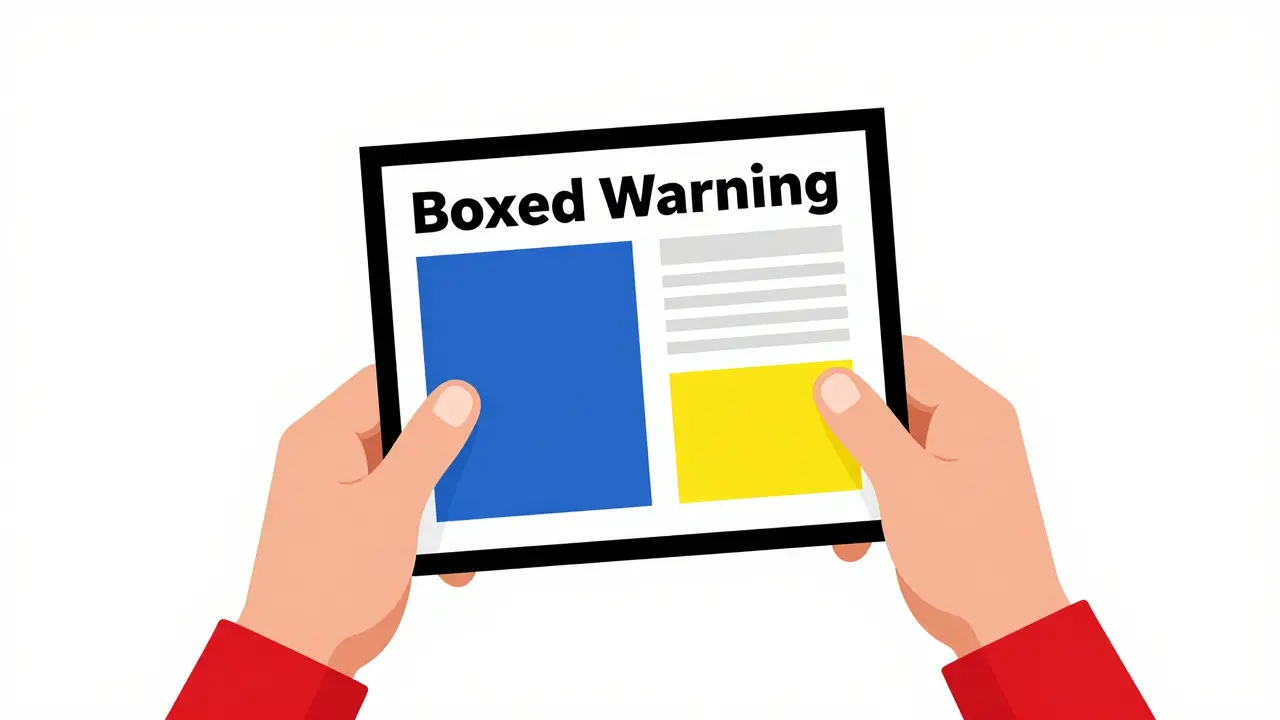
Most of us just glance at the pharmacy sticker and start taking our pills. But tucked inside those folded papers is a roadmap for survival. When a medication has a high risk of toxicity, the Medication Guide is a FDA-mandated patient document designed to communicate the most serious risks associated with a drug. Knowing exactly where to look for overdose warnings can be the difference between a scary situation and a fatal one.
Quick Tips for Spotting Danger
- Look for the "Boxed Warning" at the very top of the document.
- Search for the "Overdosage" section for specific symptoms and antidotes.
- Identify the "Contraindications" to see who should never take the drug.
- Check the "Warnings and Precautions" for signs of toxicity.
Decoding the Boxed Warning
If a drug is particularly dangerous, the FDA requires a Boxed Warning (also known as a Black Box Warning). This isn't just a design choice; it is the most serious warning a medication can carry. It is literally framed in a black box to ensure you can't miss it.
When you see a boxed warning, it usually means the drug has a risk of causing permanent injury or death if not used exactly as prescribed. For many high-risk medications, this section will explicitly mention the risk of respiratory depression or cardiac arrest if the dose is exceeded. If you see a black box, stop and read every word before taking the first dose.
Finding the Overdosage Section
The Prescribing Information-the long, technical document provided with medications-contains a specific section labeled "Overdosage." This is where the real data lives. Unlike the general side effects list, this section describes what happens when the body is overwhelmed by the drug.
In this section, look for three critical pieces of information: the toxic dose, the symptoms of toxicity, and the recommended treatment. For example, if you are reading a guide for a sedative, the overdosage section might describe "extreme somnolence" or "coma." Knowing these specific terms helps you identify an emergency faster than waiting for a generic symptom like "feeling sleepy."
Identifying Antidotes in the Text
An Antidote is a substance that counteracts a poison or another medication to reverse its effects. In a medication guide, antidotes aren't always listed as "The Cure." Instead, they are often found under "Treatment" or "Management of Overdose."
For instance, if you are looking at a guide for opioids, you will find mention of Naloxone. The guide will explain that Naloxone is a competitive antagonist that displaces the opioid from the receptors in the brain. If you see a specific medication name mentioned as a treatment for overdose, write it down or save the guide. In a crisis, telling an EMT exactly which antidote is listed in the medication guide can save precious minutes.
| Term | What it actually means | Urgency Level |
|---|---|---|
| Boxed Warning | Risk of death or permanent injury | Critical |
| Contraindication | Do not take if you have this condition | High |
| Adverse Reaction | Common side effects | Moderate |
| Toxicity | The point where the drug becomes poisonous | Critical |
Warnings vs. Precautions: What's the Difference?
People often skip the "Warnings and Precautions" section because it looks like a wall of text. However, there is a subtle but important difference between a warning and a precaution. A warning usually describes a known, serious risk that has occurred in clinical trials. A precaution is a suggestion to be careful based on the drug's mechanism.
When searching for overdose markers, look for words like "dose-dependent toxicity" or "cumulative effect." A cumulative effect means the drug builds up in your system over time. Even if you take the prescribed dose, you could accidentally overdose if your kidneys or liver aren't clearing the drug fast enough. This is a hidden danger that is rarely mentioned in a 30-second conversation with a pharmacist.
How to Handle Conflicting Information
Sometimes the paper guide says one thing, and a quick Google search says another. Always trust the FDA-approved labeling that comes with your specific batch of medication. Why? Because formulations change. A generic version of a drug might have different inactive ingredients that change how the body absorbs the active chemical, potentially altering the overdose threshold.
If the guide mentions an antidote that you don't have on hand, ask your doctor if you should keep a "rescue medication" at home. For those on high-dose opioids, having a nasal spray of Naloxone is the gold standard. For others, it might be a different specific reversal agent. Don't wait for the emergency to find out if you need one.
Common Overdose Signs to Look For
While the guides provide the technical terms, you need to know how those translate to real life. Most medication guides will point toward a few universal red flags:
- Respiratory Depression: Slow, shallow breathing or a complete stop in breathing.
- CNS Depression: Extreme lethargy, inability to wake up, or pinpoint pupils.
- Cardiac Arrhythmia: Irregular heartbeat or sudden fainting.
- Hypothermia: A significant drop in body temperature, often accompanied by blue-tinted lips or fingernails.
If you see these symptoms and they match the "Overdosage" section of your guide, call emergency services immediately. Do not try to "wait it out" or give the person food or drink, as this can lead to choking if they are semi-conscious.
Where is the antidote usually listed in a medication guide?
Antidotes are typically found in the "Overdosage" or "Treatment" section of the professional prescribing information. They may be listed as "recommended treatment" or "reversal agents."
What is the difference between a side effect and an overdose symptom?
A side effect is an unwanted but typically manageable reaction to a therapeutic dose (like dry mouth). An overdose symptom is a sign of toxicity, meaning the drug level in the blood has reached a dangerous or lethal concentration (like respiratory failure).
Do all medications have a specific antidote?
No. Not every drug has a direct chemical antidote. In those cases, the "Overdosage" section will describe "supportive care," which includes things like gastric lavage (stomach pumping), activated charcoal, or mechanical ventilation to keep the patient alive until the drug wears off.
What should I do if I can't find the medication guide?
You can look up the "DailyMed" database provided by the National Library of Medicine. Search for the drug's name to find the official FDA label and the overdosage information.
Can a "Boxed Warning" be ignored if I feel fine?
Never ignore a boxed warning. These are based on clinical data showing a high risk of severe adverse events. Even if you feel fine now, the warning describes potential risks that could be triggered by a drug interaction or a change in your health.
Next Steps for Your Safety
If you are currently taking a medication with a known overdose risk, take ten minutes today to highlight the "Overdosage" and "Warnings" sections of your guide. If you live with others, show them where the guide is kept and explain what the antidote is. In a medical emergency, the person trying to help you may not know how to read a pharmaceutical label; making the key information obvious can save your life.
Betty Kawira
April 26, 2026 AT 14:31Honestly, so many people just toss those papers in the trash without a second thought. I've seen cases where having that specific info ready for the paramedics literally saved a life because the family didn't know what the drug was. If you're on something heavy, just take a highlighter to the overdosage section and tape it to the side of the bottle. It sounds overkill until it's not. Also, don't forget to check for those cumulative effects mentioned, especially if you've got kidney issues, because that's where things get sneaky. Most people think overdosing is only about taking a whole bottle at once, but building up toxicity over a week is a real thing that happens more than you'd think. Definitely keep a digital copy of the guide on your phone too, just in case you're out and about and need to show it to a doctor quickly. Just a pro tip from someone who's seen the chaos of an ER when no one knows what the patient took.
Amber McCallum
April 28, 2026 AT 09:43Some people just don't want to take care of their own bodies. It's sad.
Kali Murray
April 29, 2026 AT 22:35this is actually super useful info ✨ thanks for sharing ✌️
Abhishek Charan
April 30, 2026 AT 11:19Why are we acting like people can't just Google this...?? 🙄 It's 2024, for goodness sake!!! Who actually reads those tiny folded papers anymore??? 📄❌
Steve Grayson
May 1, 2026 AT 05:32I agree with the point about DailyMed. It is much easier to search for a drug on a screen than to squint at those tiny leaflets.
Ryan Wilson
May 2, 2026 AT 19:30The absolute audacity of some people to blindly swallow pills like they're candy without reading the warnings is a masterclass in cognitive dysfunction. It's a pharmacological Russian Roulette played by the blissfully ignorant. We live in an age of information, yet people treat their health like a game of 'guess and check' with their own organs. Truly a spectacular display of negligence.
Kat G
May 3, 2026 AT 23:40I always read the boxed warnings. It is better to be safe than sorry.
Raymond Lipanog
May 5, 2026 AT 18:57It is indeed prudent to maintain a balance between trusting medical professionals and exercising personal due diligence regarding the substances one ingests. Respecting the biological boundaries of our own bodies is a fundamental aspect of a mindful existence.
Stephen Johnson
May 6, 2026 AT 05:26There is a certain quiet peace in understanding exactly how the things we take interact with our consciousness. It reminds us how fragile the line is between wellness and toxicity.
Kevin Taggart
May 7, 2026 AT 15:29i didnt know about the black box thing... thnx for the tip :)