Norovirus Outbreaks: Gastroenteritis Control and Hydration Management

Imagine this: you’re at a wedding, a cruise ship dinner, or even just a family gathering. Someone gets sick-violently. Within hours, half the room is hunched over toilets or vomiting in corners. This isn’t a movie plot; it’s Norovirus, the most common cause of acute gastroenteritis in the United States. It spreads faster than rumors on social media and hits harder than a hangover. With an estimated 19 to 21 million cases annually, norovirus doesn’t discriminate. It targets schools, nursing homes, hospitals, and restaurants with equal ferocity.
If you’re reading this, you might be dealing with an outbreak right now, or perhaps you’re preparing for one. Whether you’re a healthcare worker, a facility manager, or just someone who wants to keep their family safe, understanding how to control the spread and manage hydration is critical. Norovirus is nasty, but it’s manageable if you know the rules. Let’s break down exactly what you need to do to stop it in its tracks.
Why Norovirus Is So Hard to Stop
You can’t fight what you don’t understand. Norovirus is essentially a biological ninja. It was first identified in 1968 after an outbreak in Norwalk, Ohio, which is where it got its name. But here’s the kicker: you only need about 18 viral particles to get infected. Eighteen. That’s less than a grain of sand.
The virus sheds massively from infected people. We’re talking up to 10^12 viral particles per gram of stool. And it’s tough as nails. It survives freezing, heating up to 140°F (60°C), and can linger on dry surfaces like door handles or bed rails for up to 12 days. Alcohol-based hand sanitizers? They barely scratch it. According to CDC data, person-to-person contact accounts for 62% of outbreaks, while foodborne transmission makes up another 23%. The rest comes from contaminated surfaces and water.
This resilience means standard cleaning routines often fail. If you’re running a healthcare facility or a long-term care home, a single outbreak can cost between $5,000 and $15,000, not to mention the emotional toll on patients and staff. The key isn’t just reacting; it’s preventing transmission through strict protocols.
Immediate Steps for Outbreak Control
When symptoms start popping up-vomiting, diarrhea, stomach cramps-you need to act fast. The incubation period is short, just 24 to 48 hours, so delays are costly. Here’s your immediate action plan based on CDC guidelines updated in November 2023:
- Isolate Immediately: Place symptomatic patients in single-occupancy rooms if possible. If that’s not an option, cohort them together in a designated area away from healthy individuals. Do not move asymptomatic exposed residents to unaffected units-they may already be shedding the virus without showing symptoms.
- Stop Group Activities: Cancel all group meals, therapy sessions, or social events until at least 48 hours after the last case resolves. Movement spreads the virus.
- Exclude Food Handlers: Anyone working with food must stay home during illness and for at least 48 to 72 hours after symptoms stop. In healthcare settings, enforce a strict 72-hour exclusion rule.
- Restrict Visitors: Limit visitors to essential personnel only. Provide them with clear instructions on hand hygiene and symptom recognition. Facilities with structured visitor education programs see 35% fewer secondary cases.
Staff compliance is often the weak link. During outbreaks, hand hygiene adherence drops by 25-30% due to workflow pressure. Counter this by placing additional handwashing stations outside affected units and conducting mandatory training within 24 hours of declaring an outbreak.
The Hand Hygiene Rule: Soap and Water Only
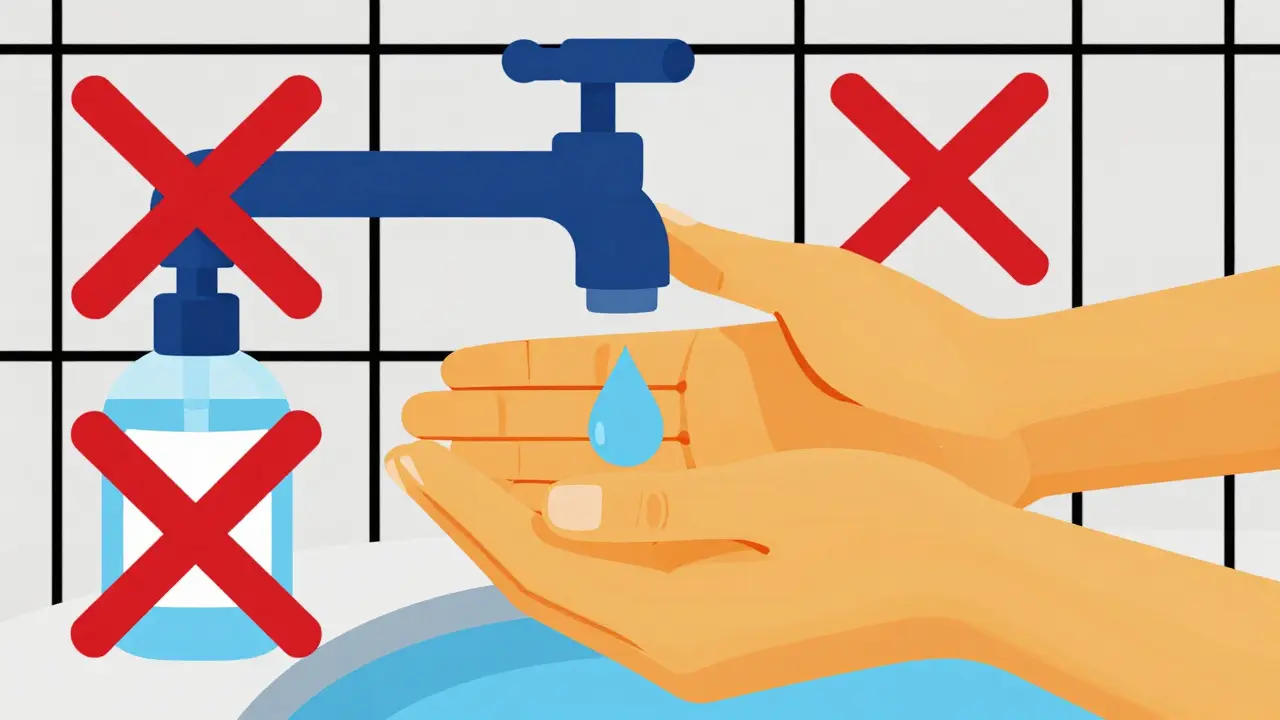
This is non-negotiable. You cannot rely on alcohol-based hand sanitizers for norovirus. The virus has a protein coat that alcohol struggles to penetrate. Instead, use plain soap and warm water. Scrub vigorously for at least 20 seconds. Focus on areas under fingernails and between fingers, where the virus hides.
Wash hands:
- After using the bathroom
- After changing diapers or assisting with toileting
- Before preparing food or eating
- After touching any potentially contaminated surface
Dr. Aron Hall, Chief of the CDC’s Division of Viral Diseases, emphasizes that "hand hygiene with soap and water is essential, as alcohol-based hand sanitizers are not sufficient alone for norovirus prevention." Make this a habit, not an afterthought.
Environmental Cleaning: Bleach Is Your Best Friend
Standard disinfectants won’t cut it. You need hospital-grade cleaners with EPA-registered claims against norovirus. The gold standard remains chlorine bleach. For general surface disinfection, mix a solution of 1,000 to 5,000 ppm chlorine. That translates to roughly 5 to 25 tablespoons of household bleach per gallon of water. Always check the label on your bleach product to ensure proper dilution.
Clean high-touch surfaces frequently: door handles, light switches, bed rails, bathroom fixtures, and medical equipment. Increase cleaning frequency during an outbreak. Consider using hydrogen peroxide vapor systems for terminal room disinfection after the outbreak ends; recent Navy Preventive Medicine guidelines show this method reduces viral contamination by 99.9% compared to standard cleaning.
Don’t forget laundry. Handle soiled linens carefully. Shake them as little as possible to avoid aerosolizing the virus. Wash with detergent and hot water, then dry completely. Use EPA-approved disinfectants if available.
Hydration Management: Preventing Dehydration
Vomiting and diarrhea lead to rapid fluid loss. Dehydration is the biggest risk, especially for infants, the elderly, and immunocompromised individuals. Monitoring urine output, mental status, and signs like dry mouth or dizziness is crucial. Assess symptomatic residents every 4 to 6 hours.
Oral Rehydration Therapy (ORT) is the first line of defense for mild to moderate dehydration. Use solutions containing 50-90 mmol/L sodium, 75-100 mmol/L glucose, and 20-25 mmol/L potassium, following WHO standards. Commercial products like Pedialyte work well. For infants and young children, offer 50-100 mL of ORT after each episode of vomiting or diarrhea. Small, frequent sips are better than large gulps, which can trigger more vomiting.
If oral fluids aren’t tolerated or dehydration is severe, intravenous (IV) rehydration is necessary. Use isotonic crystalloid solutions like 0.9% normal saline or lactated Ringer’s. Initial fluid boluses should be 20 mL/kg administered over 15 to 30 minutes. Always consult a healthcare provider for IV therapy decisions.
Elderly patients in long-term care facilities often have a reduced thirst sensation. Don’t wait for them to ask for water. Proactively offer fluids and monitor closely. Immunocompromised patients may shed the virus for weeks or months, requiring extended rehydration support and isolation.
| Measure | Effectiveness | Key Details |
|---|---|---|
| Hand Hygiene | High | Soap and water required; alcohol sanitizers ineffective alone |
| Surface Disinfection | High | Bleach solution 1,000-5,000 ppm; EPA-registered disinfectants |
| Isolation | Medium-High | Single rooms preferred; cohorting if necessary; 48-hour post-symptom rule |
| Food Handler Exclusion | High | Exclude for 48-72 hours post-symptoms; stricter in healthcare settings |
| Visitor Restrictions | Medium | Limit to essential visitors; educate on hygiene protocols |
Special Populations and Long-Term Care Challenges
Long-term care facilities face unique hurdles. About 68% of norovirus outbreaks in these settings occur during winter months (November to March), coinciding with staffing shortages and increased vulnerability among residents. Room limitations make cohorting difficult. When single rooms aren’t available, designate specific patient care areas or contiguous sections for affected cohorts.
Immunocompromised patients present another challenge. They may experience prolonged viral shedding, sometimes for weeks or months. Extended isolation periods are necessary for those with cardiovascular, autoimmune, immunosuppressive, or renal disorders. Monitor them closely for dehydration and secondary infections.
Infants and young children dehydrate quickly. Their smaller body mass means fluid losses impact them more severely. Ensure caregivers know how to administer ORT correctly. Watch for signs of lethargy, sunken eyes, or no tears when crying.
Future Directions and Prevention
While there’s no cure for norovirus, prevention strategies are evolving. Takeda Pharmaceutical Company developed a candidate vaccine that showed 46.7% efficacy against GI.1 strains in phase 2b trials published in the New England Journal of Medicine in 2022. FDA approval was targeted for 2025, offering hope for future prevention. However, vaccines currently in development target specific genotypes, and norovirus has many variants. A universal vaccine remains a work in progress.
Real-time reporting systems are improving response times. The Wisconsin Department of Health Services implemented a system in January 2023 that reduced outbreak investigation time from 72 hours to 24 hours. Faster detection means faster containment. State health departments continue to refine protocols, emphasizing multi-pronged approaches combining isolation, hygiene, cleaning, and food safety.
No single intervention stops norovirus. It requires a combination of strategies. As research continues, staying informed about the latest guidelines from the CDC and local health departments is vital. Remember, norovirus is resilient, but so are we. With disciplined hygiene, proper cleaning, and careful hydration management, you can control outbreaks and protect those around you.
How long does norovirus live on surfaces?
Norovirus can survive on dry surfaces for up to 12 days. It is highly stable and resistant to freezing and heating up to 140°F (60°C). Regular cleaning with bleach-based disinfectants is essential to eliminate it.
Can alcohol-based hand sanitizer kill norovirus?
No, alcohol-based hand sanitizers are not effective against norovirus because the virus has a protein coat that resists alcohol. You must wash your hands with soap and water for at least 20 seconds to remove the virus.
What is the best way to prevent norovirus in a household?
Prevent norovirus by washing hands thoroughly with soap and water, disinfecting contaminated surfaces with a bleach solution, avoiding preparing food while sick, and isolating the infected person until 48 hours after symptoms resolve.
How do I treat dehydration caused by norovirus?
For mild to moderate dehydration, use Oral Rehydration Therapy (ORT) solutions like Pedialyte. Take small, frequent sips. For severe dehydration, seek medical attention for intravenous (IV) fluids such as normal saline or lactated Ringer’s.
When can someone return to work after having norovirus?
Individuals should stay home for at least 48 hours after symptoms resolve. Food handlers and healthcare workers should wait 72 hours post-symptoms before returning to work to prevent further transmission.
Is there a vaccine for norovirus?
As of 2026, no widely approved norovirus vaccine is available for the general public. Takeda’s candidate vaccine showed partial efficacy in trials, but broader protection against multiple strains is still under development.
How many people get norovirus each year?
According to CDC estimates, norovirus causes 19 to 21 million illnesses annually in the United States, making it the leading cause of acute gastroenteritis.
What concentration of bleach should I use to clean norovirus?
Use a chlorine bleach solution of 1,000 to 5,000 ppm. This equates to approximately 5 to 25 tablespoons of household bleach per gallon of water. Always follow manufacturer instructions for safe handling.