OTC Sunscreens: How SPF, Broad Spectrum, and Reapplication Actually Work
Most people think sunscreen is simple: slap it on, go outside, stay safe. But if you’ve ever bought a bottle labeled SPF 100, watched it turn orange on your skin, or skipped reapplication because "it’s only been an hour," you’re not alone-and you’re not doing it right.
What SPF Really Means (And Why 100 Isn’t Twice as Good as 50)
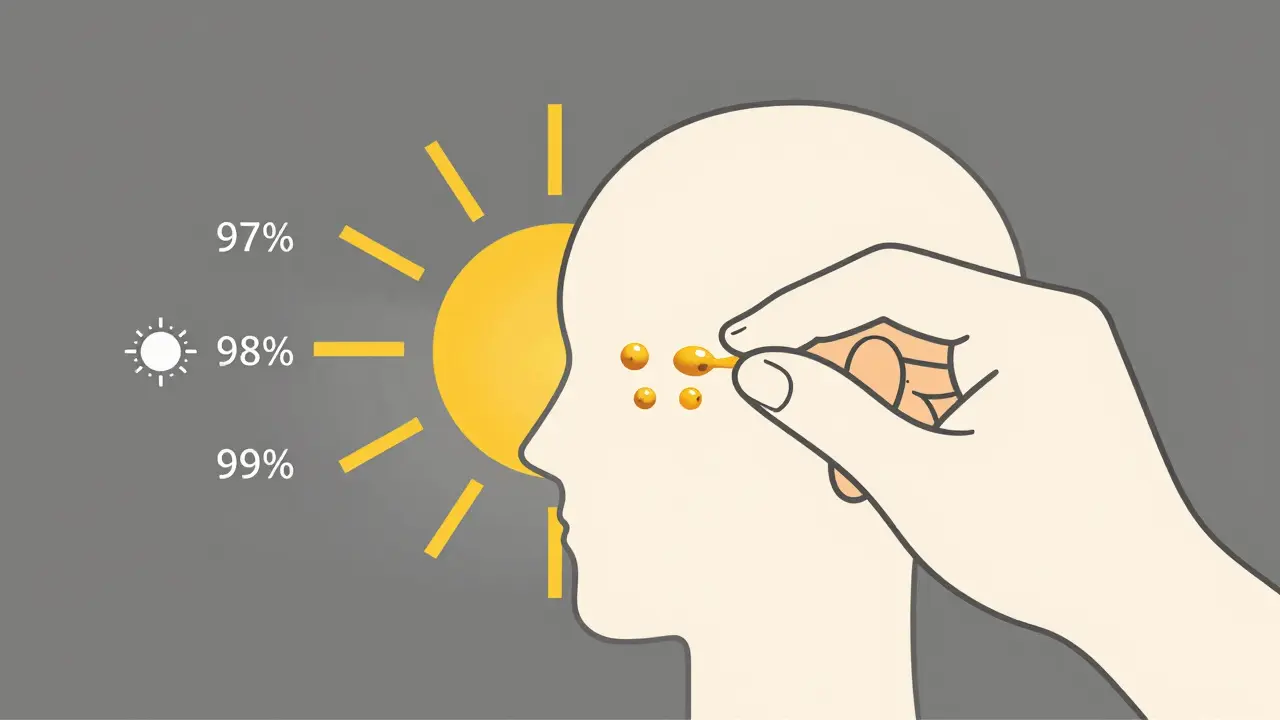
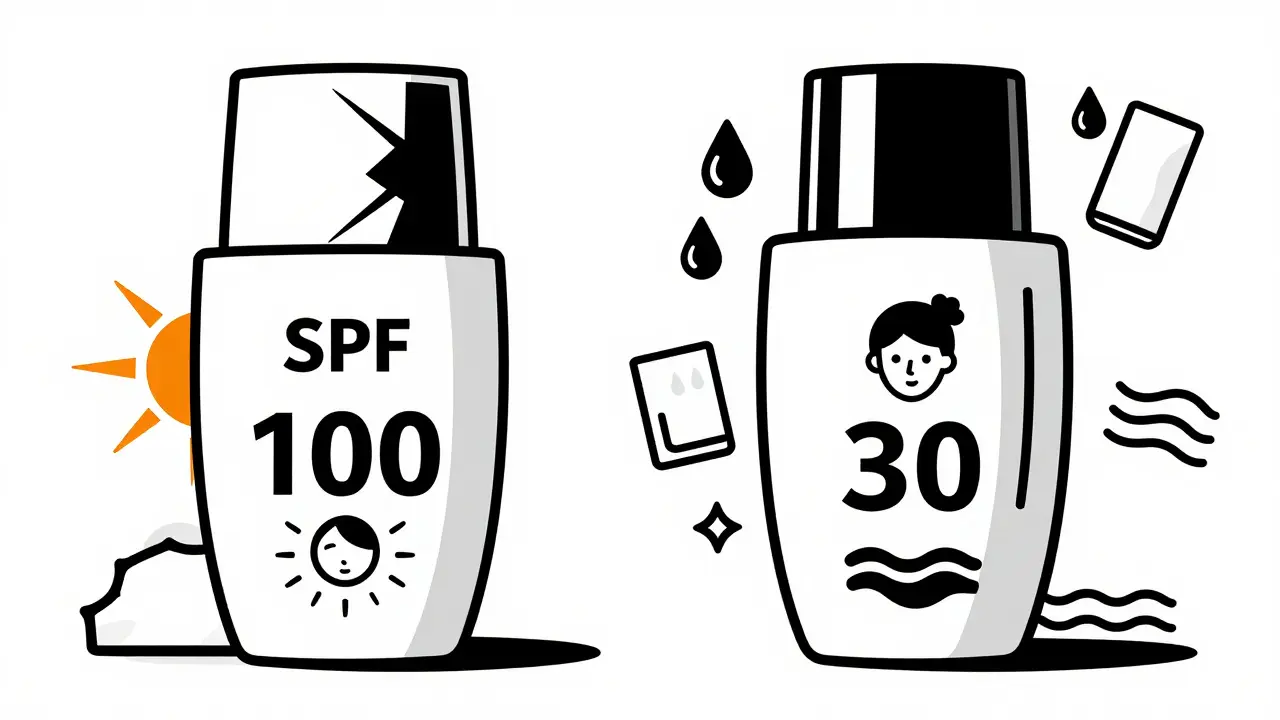
SPF stands for Sun Protection Factor. It’s not a measure of how long you can stay in the sun. It’s a ratio: how much UVB radiation gets through compared to unprotected skin. SPF 30 blocks 97% of UVB rays. SPF 50 blocks 98%. SPF 100 blocks 99%. The jump from 30 to 50 is meaningful. From 50 to 100? Barely any difference.
The math is straightforward. SPF 30 means 1 out of every 30 UVB rays gets through. SPF 50? 1 out of 50. That’s why dermatologists don’t recommend SPF 100 as a magic shield. It gives a false sense of security. You still need to reapply every two hours. You still need to use enough. You still need broad-spectrum coverage.
The FDA says sunscreens must be tested on human skin with Fitzpatrick types I-III (fair to light brown). The test uses 2 mg per square centimeter of skin-that’s about a quarter teaspoon for your face. Most people use half that. So even if you’re wearing SPF 50, you’re probably getting the protection of SPF 25 or lower.
Broad Spectrum Isn’t Just a Marketing Word
UVB causes sunburn. UVA penetrates deeper, causes aging, and contributes to skin cancer. That’s why broad-spectrum matters. A sunscreen labeled SPF 50 but not broad-spectrum? It’s protecting you from burn, not from long-term damage.
The FDA requires broad-spectrum sunscreens to pass a Critical Wavelength test. That means they must block UV rays up to at least 370 nanometers. Anything less? It’s not truly broad-spectrum, even if the label says it is. In 2025 Consumer Reports tested 107 sunscreens. One mineral sunscreen marketed as SPF 30 actually delivered SPF 4. Another claimed SPF 50 but blocked less than half the UVA it should have.
Mineral sunscreens use zinc oxide and titanium dioxide. They sit on top of the skin and reflect UV. Chemical sunscreens absorb UV and convert it to heat. Both can work-but not all formulas are equal. Zinc oxide is the only mineral filter that covers the full UVA range. Titanium dioxide alone? It’s weak against long UVA rays. That’s why many mineral sunscreens fail broad-spectrum testing.
La Roche-Posay Anthelios Melt-in Milk SPF 60 scored 92/100 in protection. Blue Lizard Sensitive SPF 50, a mineral option, scored 55/100. The difference? Zinc oxide concentration and formulation. The best mineral sunscreens use at least 15% zinc oxide. Many cheaper ones use 5-10%-barely enough.
Reapplication: The Most Ignored Rule
You don’t need to reapply because sunscreen "wears off." You reapply because it gets rubbed off, sweated off, or washed off. And you’re almost certainly not using enough the first time.
The American Academy of Dermatology says reapply every two hours, and immediately after swimming, sweating, or towel-drying. But a 2024 study of beachgoers found only 14.3% did it right. On Reddit’s r/SkincareAddiction, 72% of 1,500 users admitted they skip reapplication during beach days.
Here’s the truth: if you’re wearing SPF 50 and you’re at the pool for six hours, you’ve got zero protection by hour four if you didn’t reapply. Sunscreen doesn’t last. It doesn’t build up. It doesn’t become more effective over time. It’s a barrier. And barriers break.
Water resistance claims are regulated. A product labeled "water-resistant (40 minutes)" passed a test in chlorinated water for 40 minutes. "80 minutes" means it lasted 80. But towel drying removes up to 80% of the product. So even if you’re "water-resistant," you still need to reapply after drying off.
Mineral vs. Chemical: Which One Should You Use?
Mineral sunscreens (zinc oxide, titanium dioxide) start working immediately. Chemical ones need 15-20 minutes to absorb. That’s why mineral is better for kids or sensitive skin. But they often leave a white cast. That’s why many people with darker skin avoid them.
That white cast isn’t just cosmetic. It’s a sign the formula isn’t well-dispersed. High-quality mineral sunscreens use micronized zinc oxide and tinted bases to blend. Brands like EltaMD UV Clear SPF 46 (with 9% zinc oxide and niacinamide) are dermatologist favorites for acne-prone and rosacea skin. Caravee Hydrating Sheer Sunscreen SPF 30, which users report improves skin barrier function, uses a similar approach.
Chemical sunscreens-like those with avobenzone, octinoxate, or octocrylene-blend invisibly. But they can sting eyes, irritate sensitive skin, and cause allergic reactions. They’re also the reason Hawaii banned oxybenzone and octinoxate in 2021. Studies show even tiny amounts (62 parts per trillion) damage coral DNA.
Consumer Reports found chemical sunscreens consistently outperformed mineral ones in UV protection. But mineral sunscreens scored higher in user experience: less stinging, less irritation, no chemical smell. So if you’re choosing between a chemical sunscreen that stings your eyes and a mineral one that leaves a white cast, you’re choosing between two bad options. The answer? Find a well-formulated one.
What’s Really in Your Sunscreen?
The FDA allows 16 chemical filters and two mineral ones. But not all are created equal. Avobenzone is the most effective UVA filter-but it degrades in sunlight unless stabilized with octocrylene or other ingredients. Many cheap sunscreens use unstable avobenzone. You get protection for 30 minutes, then nothing.
Octinoxate is common, cheap, and effective against UVB. But it’s banned in reef-safe zones. Oxybenzone is the most controversial. It’s in 60% of U.S. sunscreens. It’s linked to hormone disruption in lab studies and coral bleaching. The EU caps it at 2.2%. The U.S. allows up to 6%. The FDA is reviewing it for safety-but no ban yet.
Mineral sunscreens don’t have these issues. Zinc oxide is non-nano, non-absorbing, and non-toxic. It’s also anti-inflammatory. That’s why it’s recommended for melasma, rosacea, and post-laser skin. But only if it’s used at sufficient concentration. Many "mineral" sunscreens are mostly titanium dioxide with a sprinkle of zinc. That’s not enough.

How to Actually Use Sunscreen Right
Here’s what works:
- Use 1/4 teaspoon for your face. That’s five pea-sized dots: forehead, nose, cheeks, chin. Rub it in. Don’t skip your ears, neck, or scalp if you’re thinning.
- Wait 15 minutes before going outside if it’s chemical. Mineral? Go right away.
- Reapply every two hours. If you’re sweating or swimming, reapply after 40 or 80 minutes (check the label).
- Don’t trust spray sunscreens unless you spray generously and rub it in. Most people spray once and think they’re covered. They’re not.
- Check the expiration date. Sunscreen loses effectiveness after 3 years. If it smells off or separates, toss it.
- Use UV camera apps like Sunscreenr to see where you missed spots. They’re not perfect, but they’re eye-opening.
Price doesn’t always equal quality. CVS Health SPF 50 spray costs $2.99. JLo Beauty SPF 30 moisturizer costs $55. The median price? $14.75 per ounce. La Roche-Posay and EltaMD cost more, but they’ve been tested. CeraVe and Neutrogena are reliable too. But avoid mystery brands with no testing data.
The Future of Sunscreen
The FDA’s final rules on sunscreen are due by December 2025. They’ll likely ban 12 ineffective or unsafe chemical filters and tighten broad-spectrum testing. The goal? Make sure every sunscreen on the shelf actually does what it says.
Meanwhile, new tech is coming. Shade Smart, a wearable UV monitor launching in Q2 2025, will alert your phone when it’s time to reapply. AI-powered skin cancer apps are pushing daily sunscreen use. And mineral sunscreen sales are growing fast-expected to hit 35% of the market by 2027.
But the biggest barrier isn’t technology. It’s habit. Only 32% of U.S. adults use sunscreen daily. Among 18-29-year-olds? Just 21%. That’s why skin cancer rates keep rising. Sunscreen isn’t optional. It’s not a luxury. It’s as essential as brushing your teeth.
Don’t buy the hype. Don’t trust the number on the bottle. Don’t skip reapplication. Choose a broad-spectrum SPF 30 or higher. Use enough. Reapply. That’s it. The rest is noise.
Is SPF 100 really better than SPF 50?
No. SPF 50 blocks 98% of UVB rays. SPF 100 blocks 99%. That’s a tiny difference. But SPF 100 gives a false sense of security. People think they can stay out longer or use less. Neither is true. You still need to reapply every two hours, no matter the SPF.
Do I need to wear sunscreen on cloudy days?
Yes. Up to 80% of UV rays penetrate clouds. UVA rays, which cause aging and skin cancer, are especially strong on overcast days. Daily sunscreen use reduces melanoma risk by 50%, according to the American Academy of Dermatology. That includes days when it’s gray and cool.
Why does my mineral sunscreen leave a white cast?
It’s usually because the zinc oxide particles are too large or the formula isn’t tinted. Cheaper mineral sunscreens use low concentrations of zinc oxide and don’t blend well. Look for micronized zinc oxide (9% or higher) and tinted formulas. Brands like EltaMD and Caravee are designed to blend on darker skin tones.
Are spray sunscreens safe and effective?
They can be, but most people don’t use enough. Spraying once doesn’t cover your skin. You need to spray generously and rub it in. The FDA warns that spray sunscreens may not provide adequate protection unless applied correctly. For the face, avoid sprays altogether-inhaling them can be risky. Stick to lotions or sticks for the face.
Can I rely on makeup with SPF instead of sunscreen?
No. Most makeup with SPF has less than SPF 15, and you’re not applying enough. You’d need to use seven times the normal amount of foundation to reach SPF 30. That’s not practical. Always apply a dedicated sunscreen underneath makeup. Wait 15 minutes before applying makeup to avoid pilling.
What should I look for on the label to avoid bad sunscreens?
Look for: "Broad Spectrum," SPF 30 or higher, water resistance (40 or 80 minutes), and active ingredients like zinc oxide, avobenzone, or ecamsule. Avoid products with PABA, trolamine salicylate, or if it’s a mineral sunscreen with titanium dioxide as the only active. Check reviews from Consumer Reports or dermatologist-recommended lists. If the brand doesn’t mention testing or has no third-party validation, be cautious.
If you’ve ever skipped sunscreen because it felt greasy, stung your eyes, or left a white cast-you’re not failing. The market has failed you. But better options exist. You don’t need to spend $50. You don’t need to wear a hat all day. You just need to know what to look for-and how to use it.
steve ker
January 12, 2026 AT 12:14Audu ikhlas
January 12, 2026 AT 22:52Sonal Guha
January 13, 2026 AT 00:02TiM Vince
January 14, 2026 AT 06:01Bryan Wolfe
January 15, 2026 AT 05:55Alice Elanora Shepherd
January 16, 2026 AT 20:38beth cordell
January 17, 2026 AT 20:01Cassie Widders
January 18, 2026 AT 22:06Darryl Perry
January 20, 2026 AT 11:50Jose Mecanico
January 21, 2026 AT 18:54jordan shiyangeni
January 23, 2026 AT 12:10Abner San Diego
January 24, 2026 AT 02:37