Seborrheic Dermatitis: How Medicated Shampoos Control Scalp Flaking
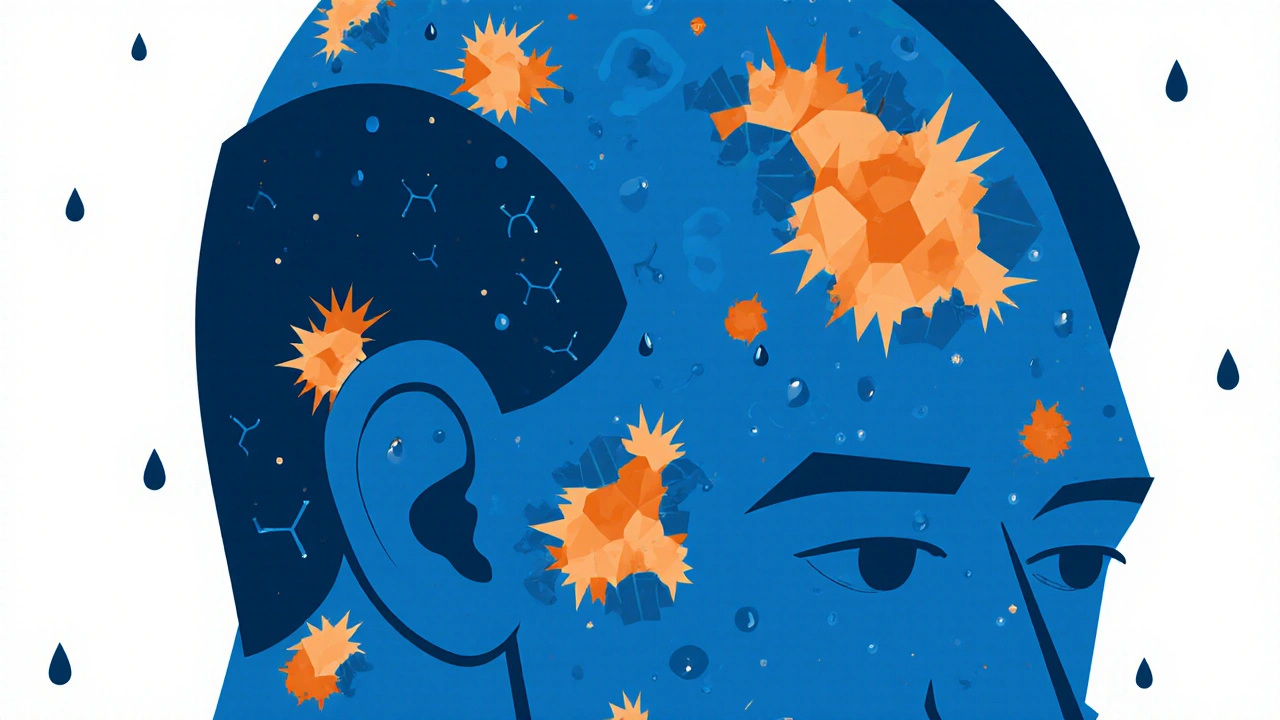
Flakes on your shoulders, an itchy scalp, or greasy patches behind your ears-these aren’t just bad hair days. They’re signs of seborrheic dermatitis, a common skin condition that affects nearly half of all adults at some point in their lives. Unlike regular dandruff, which is mild and occasional, seborrheic dermatitis is persistent, inflammatory, and often comes back even after you think it’s gone. The good news? You don’t need to live with it. Medicated shampoos can bring it under control-but only if you use them right.
What’s Really Going On Under Your Scalp?
Seborrheic dermatitis isn’t caused by poor hygiene. It’s not contagious. And it’s not an allergy. At its core, it’s a reaction to a yeast called Malassezia-a microbe that lives naturally on everyone’s skin. In some people, this yeast overgrows, especially in oily areas like the scalp, eyebrows, or nose creases. When it does, it breaks down oils on your skin into fatty acids that trigger inflammation. Your skin cells start multiplying too fast, and instead of shedding normally, they clump together into visible flakes. This process explains why your scalp feels greasy even though it’s flaking. The yeast thrives on sebum, the natural oil your skin produces. Stress, cold weather, fatigue, or even certain medications can tip the balance and cause flare-ups. People with Parkinson’s disease are especially prone-up to five times more likely to develop it. And if you’ve noticed your symptoms get worse in winter? You’re not alone. About 75% of patients report colder, drier air makes their condition worse.Why Regular Shampoo Doesn’t Cut It
Most drugstore shampoos clean dirt and oil, but they don’t touch the root cause. You might feel better after washing, but the flakes return in a day or two because the yeast is still there. That’s where medicated shampoos come in. They’re not just stronger-they work differently. Each type targets one or more parts of the problem: reducing yeast, calming inflammation, or removing dead skin. Here’s what actually works, backed by dermatology guidelines:- Ketoconazole (2%) - A powerful antifungal that directly kills Malassezia yeast. Often the first choice for moderate to severe cases.
- Zinc pyrithione (1-2%) - Antifungal and anti-inflammatory. Great for mild cases and daily use. Found in many OTC brands.
- Selenium sulfide (2.5%) - Slows skin cell turnover and reduces yeast. Can cause temporary hair discoloration in some people.
- Ciclopirox (1%) - Prescription-strength antifungal with anti-inflammatory effects. Often used when other shampoos fail.
- Coal tar (0.5-5%) - Slows skin cell growth and reduces scaling. Smells strong, but very effective for stubborn cases.
- Salicylic acid (1.8-3%) - A keratolytic that loosens and removes flakes. Works best when paired with antifungals.
Don’t expect miracles overnight. It takes 2-4 weeks of consistent use to see real improvement. And if you stop too soon, the yeast rebounds-and so do the flakes.
How to Use Medicated Shampoos Correctly
Most people make the same mistake: they lather, rinse, and move on. That’s not enough. To get results, you need to give the active ingredients time to work. Follow this simple routine:- Wet your scalp thoroughly.
- Apply a generous amount of shampoo directly to the affected areas-scalp, hairline, behind ears.
- Massage gently. Don’t scrub hard; you’re not trying to remove flakes yet.
- Leave it on for 5-10 minutes. Set a timer. This is non-negotiable.
- Rinse completely.
Use it every other day for the first 2-4 weeks. Once your scalp clears up, switch to maintenance: once or twice a week. Think of it like brushing your teeth-you don’t stop after the cavity’s gone.
For facial flakes (like around the nose or eyebrows), use a gentle antifungal cream like 1% hydrocortisone or ketoconazole cream. Apply it after washing your face. Avoid steroid creams long-term-they’re for flare-ups only.
What to Expect When You Start
The first week can be rough. Some people report:- Worse flaking (your skin is shedding the buildup)
- Dry, brittle hair (antifungals strip natural oils)
- Strong smell (coal tar and selenium sulfide aren’t subtle)
- Itching that doesn’t go away right away
This is normal. Your skin is adjusting. If itching or redness gets worse after two weeks, or if you develop a rash, stop and see a dermatologist. But don’t quit too early. About 25% of people give up before the treatment even has a chance.
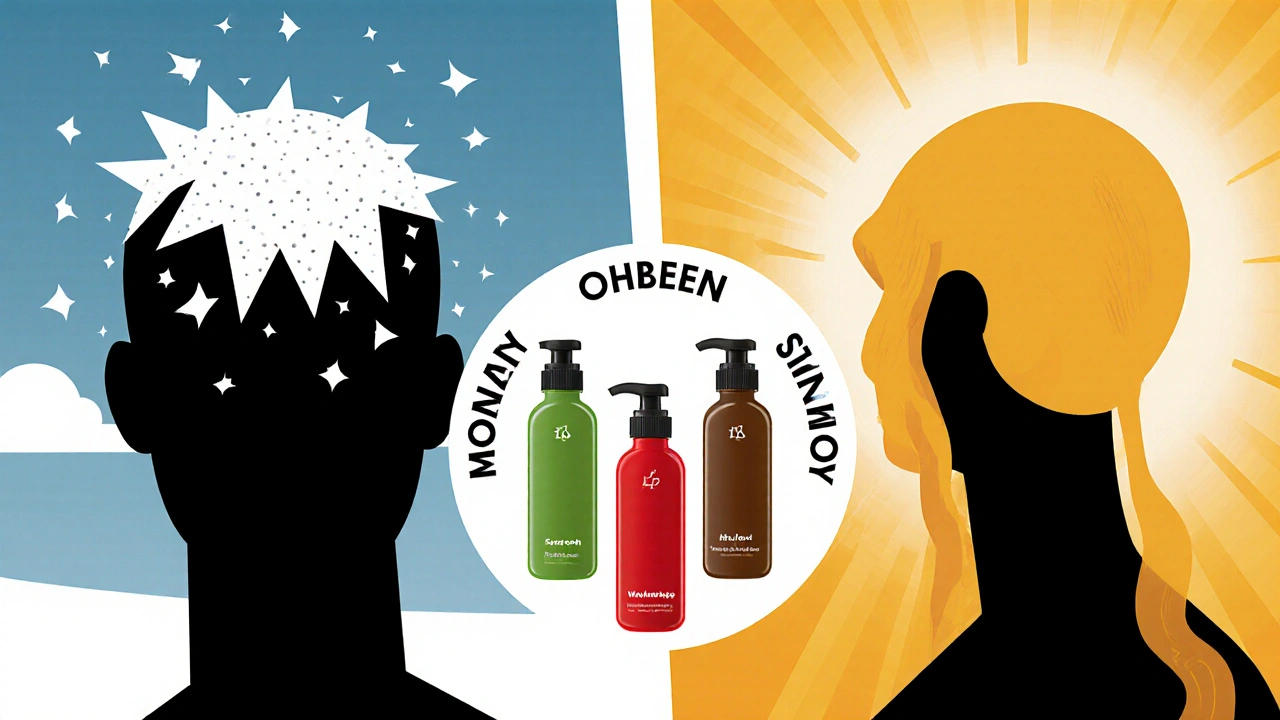
One of the biggest mistakes? Using only one shampoo forever. The yeast can adapt. Studies show that rotating products works better. Try this cycle:
- Monday: Ketoconazole shampoo
- Wednesday: Zinc pyrithione
- Friday: Coal tar
Alternate weekly. This prevents resistance and keeps your scalp from getting used to one formula. The National Eczema Society reports that 45% of users need to try 2-3 different shampoos before finding their sweet spot.
When to See a Dermatologist
You can manage most cases with OTC shampoos. But if you’ve tried 2-3 different types for 6-8 weeks with no improvement, it’s time to get help. A dermatologist can:- Confirm it’s seborrheic dermatitis and not psoriasis or eczema
- Prescribe stronger antifungals like ciclopirox or oral antifungals for severe cases
- Recommend combination therapy (e.g., shampoo + topical calcineurin inhibitor)
- Rule out underlying conditions like Parkinson’s or HIV, which can worsen symptoms
Also, if your scalp is painful, bleeding, or oozing, that’s not just flaking-it could be infected. Don’t wait.
Long-Term Management: It’s a Lifestyle, Not a Cure
There’s no cure for seborrheic dermatitis. But that doesn’t mean you can’t live normally. The goal isn’t to eliminate the yeast-because you can’t. It’s to keep it in check. Here’s what works for long-term control:- Stick to your shampoo schedule-even when your scalp looks fine
- Avoid heavy hair gels, sprays, and oils that feed the yeast
- Manage stress. It’s a trigger for 60% of flare-ups
- Use a humidifier in winter
- Wash your hair after sweating (exercise, hot weather)
- Protect your scalp from cold, dry wind with a hat
People who treat it like a chronic condition-like high blood pressure or diabetes-do best. Those who treat it like a one-time problem? The flakes come back, usually within 2-4 weeks of stopping treatment.
Real User Tips (From People Who’ve Been There)
Online forums and surveys reveal what really works behind the scenes:- “I used ketoconazole daily for a month, then switched to zinc pyrithione twice a week. No flakes in 8 months.” - London, UK
- “Coal tar stinks, but it’s the only thing that works. I use it on weekends and wash with regular shampoo midweek.” - Bristol, UK
- “I stopped using conditioner on my scalp. Big difference.” - Manchester, UK
- “I thought it was dandruff until I tried selenium sulfide. My hair was oily, but the flakes vanished.” - Edinburgh, UK
One common thread? Patience. And rotation. No single product is perfect for everyone. What works in summer might not work in winter. Your needs change. So should your shampoo.
What Doesn’t Work (And Why)
Avoid these myths:- Tea tree oil - May help mild dandruff, but not enough for true seborrheic dermatitis. Too weak.
- Apple cider vinegar rinses - Can irritate inflamed skin. Won’t touch yeast.
- Shaving your head - Helps if you have facial seborrheic dermatitis (37% clear up after shaving beard), but not for scalp.
- More frequent washing - Washing daily without medicated shampoo just dries your scalp and makes flaking worse.
Don’t waste time or money on gimmicks. Stick to the science-backed options.
Is seborrheic dermatitis the same as dandruff?
Dandruff is a mild form of seborrheic dermatitis. Both involve flaking, but seborrheic dermatitis includes redness, greasiness, and inflammation. Dandruff usually doesn’t itch or spread beyond the scalp. If you have flakes on your eyebrows or nose, it’s seborrheic dermatitis.
Can I use medicated shampoo every day?
Yes, during the initial treatment phase (first 2-4 weeks), daily or every-other-day use is recommended. Once symptoms improve, reduce to once or twice a week for maintenance. Daily use long-term can dry out your hair, so rotate products and monitor your scalp’s response.
Why does my scalp get worse in winter?
Cold, dry air strips moisture from your skin and reduces sunlight exposure. Sunlight helps suppress Malassezia yeast, so less sun means more flare-ups. Indoor heating also dries the air. Using a humidifier and protecting your scalp with a hat can help.
Do I need to stop using hair products?
Yes, avoid heavy styling products like gels, waxes, and oils-they feed the yeast and clog pores. Stick to water-based or alcohol-based sprays. Wash your hair after using them. If you use conditioner, only apply it to the ends, never the scalp.
Will this go away on its own?
Sometimes, especially in babies (cradle cap), it clears without treatment. But in adults, it rarely goes away permanently. Without ongoing care, it comes back. The yeast is always there. Treatment doesn’t cure it-it manages it.
Can stress cause seborrheic dermatitis?
Stress doesn’t cause it, but it’s one of the top triggers. About 60% of people report flare-ups after stressful events like job loss, illness, or sleep deprivation. Managing stress through sleep, exercise, or mindfulness can reduce how often your scalp flares up.
Seborrheic dermatitis is frustrating, but it’s not hopeless. With the right shampoos, proper use, and a long-term plan, you can control it. You don’t need to live with flakes, itchiness, or embarrassment. Start with one medicated shampoo. Stick with it for a month. Rotate if needed. And remember-you’re not fighting a battle you can’t win. You’re just managing a condition that millions handle every day.
Gus Fosarolli
November 27, 2025 AT 19:25So let me get this straight - I’ve been treating this like dandruff for years and the whole time it was just yeast throwing a rave on my scalp? 🤯
Coal tar smells like a campfire that died screaming, but I’ll take it over flakes any day. Now I just need to figure out how to explain to my date why I smell like a blacksmith’s garage.
Evelyn Shaller-Auslander
November 29, 2025 AT 15:57i used ketoconazole for 3 weeks and it was like my scalp finally remembered how to be normal. no more shoulder snow.
also i stopped using conditioner on my roots. big difference.
ps: dont give up too soon.
Jill Ann Hays
November 30, 2025 AT 17:31The biological mechanism involving Malassezia-induced sebum degradation leading to hyperproliferation of keratinocytes is well documented in the Journal of the American Academy of Dermatology 2021
What is often overlooked is the role of lipid peroxidation in amplifying inflammatory cascades
Most users fail because they treat symptoms not pathophysiology
Mike Rothschild
November 30, 2025 AT 19:47I’ve had this since college and this is the first time someone actually explained why the shampoo needs to sit for 10 minutes
It’s not a wash it’s a treatment
Same as putting antibiotic ointment on a cut - you don’t rinse it off right away
Also rotating shampoos? Genius. Yeast is sneaky
Ron Prince
December 1, 2025 AT 16:42Why do Americans pay $15 for shampoo when you can just wash with soap and stop being weak
My grandpa never heard of ketoconazole and he lived to 92
Stop overcomplicating everything
Also tea tree oil works fine if you’re not a baby
Sarah McCabe
December 3, 2025 AT 10:54Winter = scalp apocalypse 🧊😭
Humidifier saved my life. Also switched to zinc pyrithione on Tues/Thurs and now I look like a normal human again
PS: I still smell like a pharmacy but hey - no flakes on my black coat 😌
King Splinter
December 5, 2025 AT 00:54Look I get it - you want to sell us a $20 shampoo routine like it’s some sacred ritual
But here’s the truth - most of this is just placebo wrapped in jargon
My scalp flakes when I’m stressed - not because of yeast
Try therapy. Or sleep. Or stop caring so much
Also why does everyone act like coal tar is a miracle drug? It smells like death and gives me headaches
Kristy Sanchez
December 6, 2025 AT 06:33So let me get this straight - I’m supposed to rub antifungal shampoo into my scalp like it’s a sacred ritual and then wait 10 minutes like I’m meditating?
Meanwhile my ex is out there living her best life with a full head of hair and zero shame
Why does my scalp feel like a war zone and everyone else’s just… works?
Also I tried ketoconazole and my hair turned into straw. So thanks for that
Michael Friend
December 6, 2025 AT 12:37Everyone’s acting like this is some breakthrough but I’ve been dealing with this for 15 years and it’s still a nightmare
They say rotate shampoos - but what if you’ve tried all six and none work?
What if you’re just cursed?
What if the yeast wins?
I’m not giving up but I’m also not holding my breath
And don’t tell me to ‘just use a humidifier’ - I live in Arizona
Jerrod Davis
December 7, 2025 AT 21:48It is imperative to note that the clinical efficacy of topical antifungal agents in the management of seborrheic dermatitis has been validated in multiple randomized controlled trials published between 2017 and 2023.
Furthermore, adherence to a structured maintenance regimen significantly reduces relapse rates by a factor of 2.3 according to meta-analytic data.
One must exercise caution against anecdotal extrapolation.
Dominic Fuchs
December 8, 2025 AT 12:48Rotating shampoos is the real secret sauce
My mate in Belfast swears by coal tar on Sundays and zinc pyrithione midweek
He says it’s like changing your socks - you don’t wear the same pair every day or you start to smell
Also - stop washing your hair every day unless you’re a sweaty gym bro
Let the scalp breathe
It’s not a car engine
Asbury (Ash) Taylor
December 9, 2025 AT 07:49This is exactly the kind of clear, science-backed guidance people need.
So many of us have been misled by quick fixes and gimmicks.
Consistency is everything. The yeast doesn’t care about your schedule - but you need to care about yours.
And yes - it’s a lifestyle. Not a cure. But that’s okay.
We manage diabetes. We manage asthma.
We can manage this too.
Kenneth Lewis
December 9, 2025 AT 13:00used ketoconazole for 2 weeks and my hair felt like straw 😭
then i switched to zinc pyrithione and it was like magic
also i stopped using that heavy pomade
my scalp is chill now
ps: i still smell like a soap factory but its worth it
Jim Daly
December 10, 2025 AT 22:04you guys are overthinking this
just wash your head with dish soap
it kills yeast
my cousin did it and his flakes vanished in 3 days
also stop buying fancy shampoos
dish soap is 3 bucks
you’re welcome
ps: dont tell your dermatologist i told you this
Tionne Myles-Smith
December 12, 2025 AT 11:32I was ready to give up until I tried the rotation thing - now I’m 6 months flare-free!
It’s not perfect but it’s manageable
And honestly? Knowing I’m not alone in this makes it easier
You got this. Even on the bad days.
And yes - the coal tar smell is a vibe. Own it. 💪