Steroid Myopathy: How to Recognize Weakness and What Physical Therapy Can Do
Steroid Myopathy Risk Assessment Tool
Assess Your Muscle Strength Risk
This tool helps identify early signs of steroid myopathy using the three clinical tests described in the article. Complete all tests to assess your risk level.
What Is Steroid Myopathy?
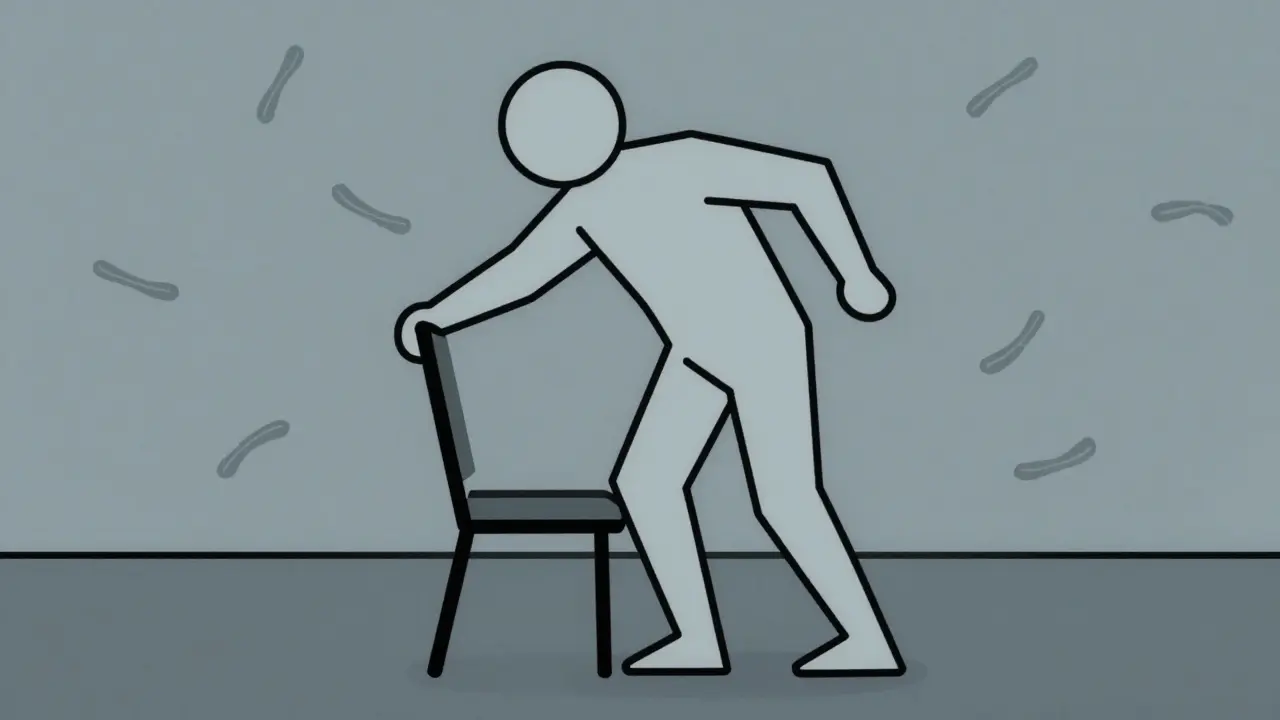
When you take steroids like prednisone or dexamethasone for asthma, rheumatoid arthritis, or other long-term conditions, your body doesn’t just calm inflammation-it also starts breaking down muscle. This isn’t a side effect you feel as pain. It’s silent. You don’t notice it until you can’t stand up from a chair without using your arms, or you need to hold onto the railing to climb stairs. That’s steroid myopathy-a muscle-wasting condition caused by corticosteroids, not by inflammation or nerve damage.
It’s more common than you think. About 1 in 5 people on daily steroids for more than four weeks develop it. Even worse, doctors miss it up to 40% of the time because they assume the weakness is just from being sick or not moving enough. But it’s not deconditioning. It’s a direct chemical effect: steroids turn off muscle-building signals and turn on muscle-destroying ones.
How Do You Know It’s Steroid Myopathy and Not Something Else?
Here’s the key: steroid myopathy doesn’t hurt. Inflammatory muscle diseases like polymyositis cause pain, swelling, and high levels of creatine kinase (CK) in blood tests. Steroid myopathy? CK levels stay normal. Blood tests look clean. EMGs show nothing unusual. No inflammation. No fever. No rash. Just pure, painless weakness.
The pattern is unmistakable. Weakness hits the hips and thighs first-your pelvic girdle. Then shoulders. Your arms and legs feel heavy, but your hands and feet are fine. You can still wiggle your toes. You can still grip a coffee cup. But you can’t lift your leg to get out of a car. You can’t reach for a plate on a high shelf. You need your hands to push off the armrests to stand up. That’s the classic sign.
And here’s the catch: manual muscle tests used in routine checkups often miss early weakness. A 2019 study found that 78% of people with steroid myopathy tested normal on doctor’s hand-held strength tests-but when they used dynamometers, their strength was down by 30% or more. You need objective testing to catch it before it’s advanced.
Who’s at Risk?
If you’re taking more than 10 mg of prednisone (or its equivalent) every day for over a month, you’re in the risk zone. But it’s not just about dose and time. Some people are more sensitive. Dexamethasone, often used in cancer treatments like leukemia, is especially harsh on muscles. A 2022 study found it causes more muscle loss than prednisone at the same anti-inflammatory dose.
People with COPD, asthma, lupus, or rheumatoid arthritis are the most common group affected. But it’s not limited to them. Anyone on chronic steroids-whether for organ transplants, autoimmune diseases, or severe allergies-is at risk. And in hospitals, patients on high-dose IV steroids for sepsis or acute respiratory failure can develop acute steroid myopathy in just days. Up to 20% of these patients end up needing a ventilator because their breathing muscles give out.
Why Does This Happen?
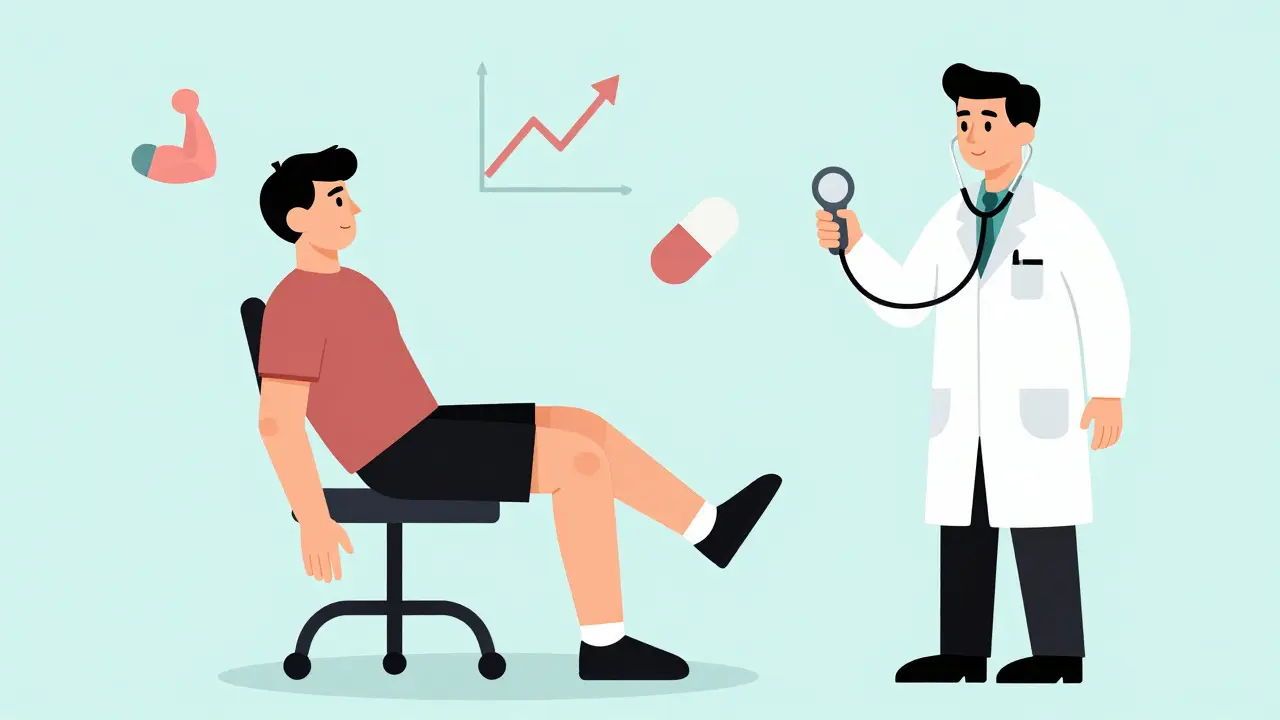
It’s not magic. It’s biology. Steroids bind to receptors inside muscle cells and switch on genes that break down proteins. Specifically, they activate the ubiquitin-proteasome system-the body’s main garbage disposal for damaged proteins. At the same time, they shut down the signals that tell muscles to rebuild. Muscle fibers don’t shrink evenly. The fast-twitch type 2b fibers, which power quick movements like standing up or climbing stairs, are the first to go. That’s why you lose strength in tasks that need sudden force, not endurance.
Biopsies show this clearly: muscle tissue looks like it’s been slowly eaten away-no immune cells, no inflammation, just empty spaces where muscle used to be. It’s a metabolic wrecking ball, not an attack from your immune system.
How Physical Therapy Can Help
Stop. Don’t stop moving. But don’t start lifting heavy weights either. The goal isn’t to push through pain-it’s to rebuild muscle without breaking it down further.
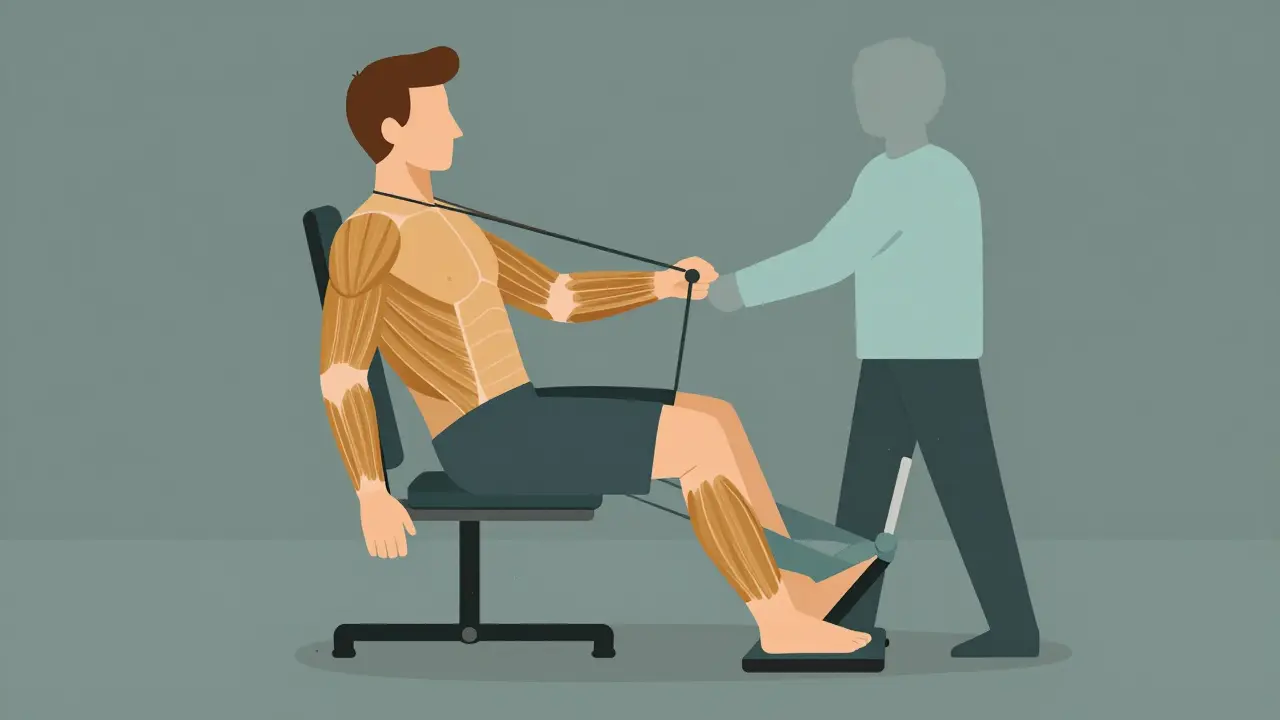
Physical therapy for steroid myopathy isn’t about high-intensity workouts. It’s about precision. The American Physical Therapy Association recommends moderate resistance training: 40-60% of your one-rep max, two to three times a week. That means using light bands, bodyweight exercises, or machines with controlled resistance-not free weights you can’t control.
Start slow. Begin at 30% of your max. Add 5-10% every two weeks. Focus on movements that target the hips and thighs: seated leg presses, step-ups, heel raises, and chair stands. A 2020 study showed patients who did supervised resistance training improved their chair rise time by 23.7% in 12 weeks. The control group, who just did stretching, improved by only 8.2%.
Here’s what to avoid: explosive movements, heavy squats, or anything that causes muscle soreness. You’re not training for a marathon-you’re trying to reverse muscle loss. Overdoing it makes things worse.
How to Test Yourself at Home
You don’t need a clinic to spot early signs. Try these simple tests:
- Five-Time Chair Stand: Sit in a standard chair with arms. Cross your arms over your chest. Stand up and sit down five times as fast as you can. If it takes longer than 10 seconds, your leg strength is likely reduced.
- Stair Climb Test: Go up and down a flight of 10-12 stairs without holding the railing. If you need to use your hands or feel your thighs shaking, your hip muscles are weak.
- Arm Raise Test: Try to lift both arms straight out to the side until they’re parallel to the floor. If you can’t hold them there for 10 seconds without shaking, your shoulder muscles are affected.
These aren’t perfect, but they’re better than waiting for your doctor to notice. If you fail even one, talk to your doctor about a referral to physical therapy.
What About Stopping Steroids?
Some people think: if steroids cause this, just stop taking them. But that’s not safe. If you have asthma, lupus, or another chronic condition, stopping steroids suddenly can be life-threatening. You can’t quit cold turkey. Dose reduction has to be slow and controlled.
The good news? Muscle strength usually improves once the dose is lowered-even if you can’t stop entirely. One study showed that patients who reduced their prednisone from 20 mg to 5 mg over six months regained 60% of lost strength without any therapy. Add physical therapy, and the gains are even better.
What’s New in Treatment?
Researchers are working on drugs that keep the anti-inflammatory benefits of steroids without the muscle damage. One promising compound, vamorolone, is in Phase III trials. Early results show it causes 40% less muscle weakness than prednisone at the same dose. It’s not available yet, but it’s coming.
Meanwhile, the International Myopathy Guidelines Consortium is finalizing the first-ever standardized physical therapy protocol for steroid myopathy, expected by late 2026. That means better, more consistent care across clinics.
Why This Matters
Steroid myopathy isn’t rare. With 17.8 million prednisone prescriptions filled in the U.S. alone in 2022, thousands of people are losing muscle strength without knowing why. And because it’s painless, it’s ignored. But the cost is real: increased falls, longer hospital stays, more rehab needs. Each case adds $1,200-$2,400 in extra healthcare costs per year.
Most rheumatology and pulmonology clinics don’t screen for it. Only 32% of rheumatologists check muscle strength regularly. That’s changing-but slowly. If you’re on long-term steroids, you need to be your own advocate. Ask for strength testing. Ask for physical therapy. Don’t wait until you can’t get off the couch.
Katie Mccreary
January 28, 2026 AT 08:38SRI GUNTORO
January 28, 2026 AT 11:39Kevin Kennett
January 28, 2026 AT 22:06Jess Bevis
January 29, 2026 AT 21:47fiona vaz
January 30, 2026 AT 10:52Robert Cardoso
January 30, 2026 AT 23:33James Dwyer
February 1, 2026 AT 21:02jonathan soba
February 2, 2026 AT 13:05matthew martin
February 3, 2026 AT 20:08Chris Urdilas
February 5, 2026 AT 08:50