Diabetic Retinopathy Screening Intervals and Treatment Options Explained
Diabetic retinopathy isn't just a complication of diabetes-it's the leading cause of preventable blindness in adults under 65. If you or someone you know has diabetes, ignoring eye health isn't an option. The good news? With the right screening and timely treatment, up to 98% of severe vision loss from this condition can be avoided. But knowing when to get checked and what to do if something’s found isn’t straightforward. Annual screenings aren’t always necessary-and sometimes, they’re not even the best choice.
What Is Diabetic Retinopathy, Really?
Diabetic retinopathy happens when high blood sugar damages the tiny blood vessels in the retina, the light-sensitive layer at the back of your eye. Over time, these vessels leak fluid, swell, or grow abnormally. In its early stages, you might not notice anything. That’s why it’s called a silent thief of vision. By the time blurry vision or dark spots appear, damage is often already advanced. There are two main stages: nonproliferative (NPDR) and proliferative (PDR). NPDR is the early phase, where vessels weaken and leak. PDR is more serious-new, fragile blood vessels grow on the retina’s surface. These vessels bleed easily and can cause scarring, retinal detachment, and permanent vision loss. About 7% of people with diabetes also develop diabetic macular edema (DME), where fluid collects in the macula, the part of the eye responsible for sharp central vision. The risk isn’t the same for everyone. It depends on how long you’ve had diabetes, how well your blood sugar is controlled, your blood pressure, kidney function, and even your genetics. Someone with type 1 diabetes for 20 years and an HbA1c of 9% is at far higher risk than someone with type 2 diabetes for 5 years and an HbA1c of 6.5%.How Often Should You Be Screened?
The old rule-get an eye exam every year-doesn’t fit everyone anymore. Modern guidelines are smarter. They use your personal risk profile to decide how often you need screening. This isn’t about cutting corners-it’s about focusing resources where they’re needed most. For people with no signs of retinopathy and good control (HbA1c under 7%, normal blood pressure, no kidney issues), screening every 2 to 4 years is safe. Studies show no increased risk of sudden vision loss with this approach. The UK National Screening Committee updated its advice in 2016 to reflect this: if you’ve had two clean screenings in a row, you can safely stretch the interval. For some low-risk type 1 patients, even 3-year intervals are acceptable. But here’s where it changes:- Mild NPDR: Come back in 1 year.
- Moderate NPDR: See an eye specialist within 3 to 6 months.
- Severe NPDR: Must be evaluated within 3 months.
- Proliferative DR: Urgent referral-within 1 month.
What Happens During a Screening?
Screening isn’t a quick glance with a flashlight. It’s a detailed digital photo of your retina. The standard is mydriatic fundus photography-your pupils are dilated, and two high-resolution images are taken of each eye. These are reviewed by trained graders using the International Clinical Diabetic Retinopathy Scale, which has five severity levels. In many places, including the UK’s National Diabetic Eye Screening Programme, these photos are taken by technicians in community centers or mobile vans. They’re then sent to specialists for review. This system achieves over 82% coverage in the UK. Newer tools are making screening easier. Devices like the D-Eye smartphone adapter let primary care providers take retinal images during routine visits. AI-powered systems, like Google’s DeepMind algorithm, can analyze these images with 94.5% accuracy-matching or beating human graders in some cases. These tools are especially helpful in rural areas where ophthalmologists are scarce.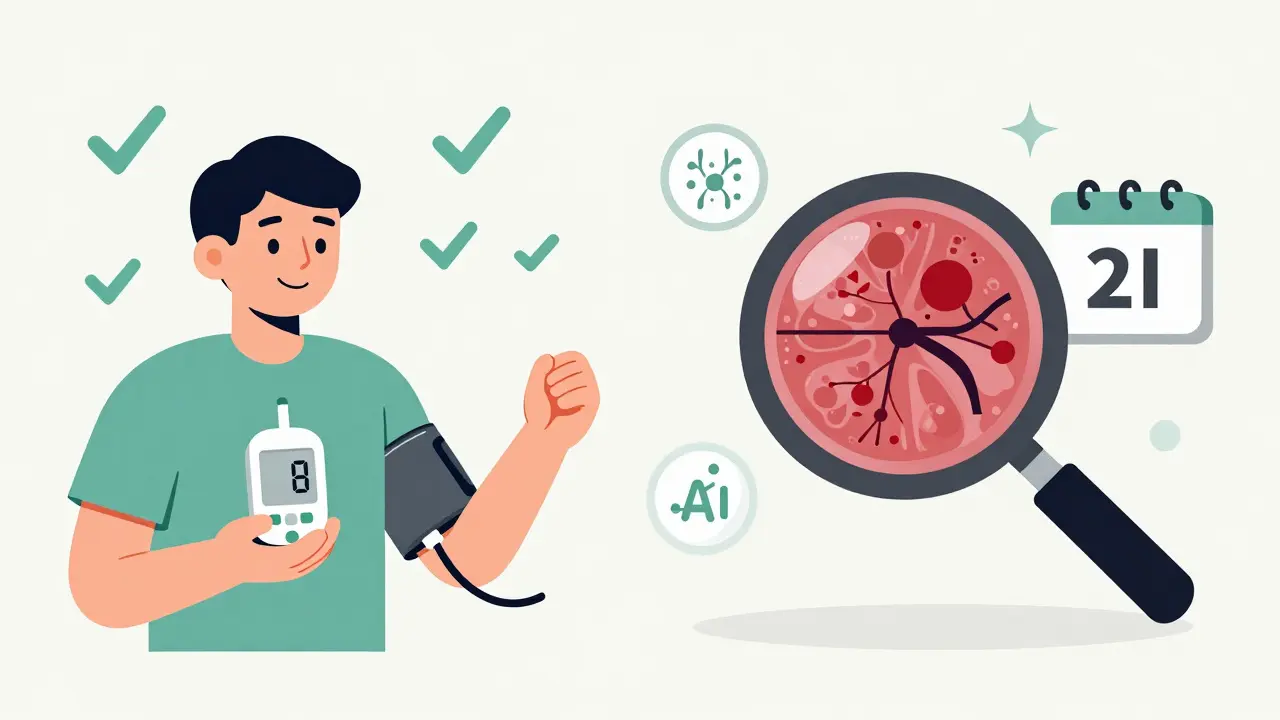
Treatment Options: From Laser to Injections
If screening finds sight-threatening retinopathy, treatment can stop or even reverse damage. The approach depends on what’s happening in your eye. For diabetic macular edema (DME), the first-line treatment is anti-VEGF injections. These drugs-like ranibizumab, aflibercept, or bevacizumab-are injected directly into the eye. They block a protein that causes abnormal blood vessel growth and leakage. Most patients see improved vision after a few treatments. Injections are usually given monthly at first, then spaced out as the condition stabilizes. For proliferative diabetic retinopathy, panretinal photocoagulation (PRP) laser is often used. This treatment applies laser burns to the peripheral retina to reduce the demand for oxygen, which causes those dangerous new blood vessels to shrink. It doesn’t restore vision, but it prevents further vision loss in 90% of cases. In advanced cases, where bleeding or scar tissue has pulled the retina out of place, a vitrectomy may be needed. This is a surgical procedure to remove blood and scar tissue from inside the eye. It’s more invasive, but often the only way to save vision. New treatments are on the horizon. Steroid implants that slowly release medication into the eye are being used for patients who don’t respond well to anti-VEGF drugs. Research is also exploring gene therapies and stem cell treatments, but these are still years away from routine use.Why Risk-Based Screening Works Better
One-size-fits-all screening wastes time and money. It also causes unnecessary anxiety. Imagine getting a dilated eye exam every year when your risk is low. You’re spending hours, possibly missing work, and paying for something that’s not urgent. Risk-based screening changes that. A 2022 review showed that extending intervals to 4 years for low-risk type 2 patients didn’t lead to a single case of sudden vision loss. Meanwhile, the NHS found that patients who switched from annual to biennial screening saved an average of £150-£200 per year in travel and time. But here’s the catch: this system only works if your doctor uses the right tools and has access to your full medical history. If your HbA1c is high, your blood pressure is uncontrolled, or you have kidney disease, you need more frequent checks-no exceptions. The biggest problem? Inconsistent application. Some clinics still push annual exams for everyone. Others use risk tools but don’t explain them clearly. Patients often don’t know why their next appointment is in 2 years instead of 1. That’s where confusion and fear creep in.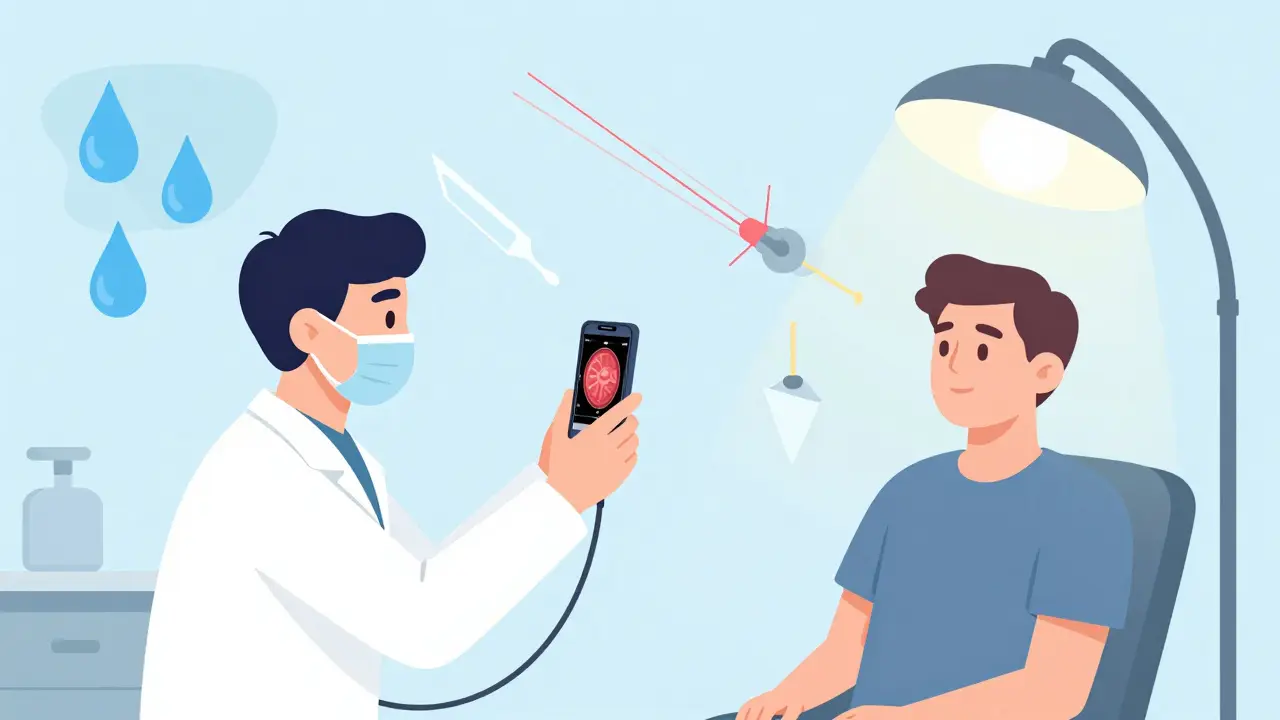
What You Can Do Right Now
You can’t control diabetes overnight, but you can control your risk of retinopathy:- Keep your HbA1c under 7%-every 1% drop reduces retinopathy risk by 35%.
- Manage your blood pressure. Keep it below 140/90 mmHg.
- Get kidney function checked yearly. Protein in the urine is a red flag.
- Don’t skip screenings, even if you feel fine.
- Ask your doctor: “Based on my numbers, what’s my risk level and when should I come back?”
What’s Next for Diabetic Eye Care?
The future is personalized. AI will soon predict your risk of retinopathy progression years in advance, based on your blood sugar patterns, blood pressure trends, and even retinal images over time. Point-of-care devices will let pharmacists or nurses take retinal photos during routine visits. Insurance companies are starting to cover these services more widely. Globally, the World Health Organization estimates that if risk-based screening is scaled up, we could prevent 2.5 million cases of blindness from diabetes by 2030. But this won’t happen without equity. Low-income communities have the same rate of diabetes-but 2.3 times higher rates of vision loss. Screening access must improve where it’s needed most. The message is clear: diabetic retinopathy is preventable. But prevention isn’t just about medicine-it’s about smart, personalized care. You don’t need to be screened every year unless your risk says so. And if you’re told you’re low-risk, ask for the evidence. Your vision is worth it.How often should I get screened for diabetic retinopathy if I have type 2 diabetes and no eye problems?
If you have type 2 diabetes with no signs of retinopathy and your blood sugar, blood pressure, and kidney function are well-controlled, you can safely wait 2 to 4 years between screenings. Many guidelines now recommend extending the interval to 3 or even 4 years for low-risk patients. But if your HbA1c is above 7%, your blood pressure is high, or you have kidney disease, you should be screened annually or more often.
Can diabetic retinopathy be reversed?
Early-stage diabetic retinopathy can’t be fully reversed, but its progression can be stopped or slowed dramatically. If you catch it early and get treatment-like anti-VEGF injections for macular edema or laser therapy for proliferative disease-you can preserve your vision. In some cases, vision that’s been blurred by swelling can improve after treatment. But once scar tissue forms or the retina detaches, damage is often permanent.
Are eye injections for diabetic retinopathy painful?
The injections themselves aren’t painful. Your eye is numbed with drops, and the needle is very fine. Most people feel only a slight pressure or a brief sting. The procedure takes less than 5 minutes. Some mild discomfort or redness afterward is normal, but serious pain is rare. If you’re anxious, talk to your doctor-they can offer a calming technique or even a mild sedative.
Can I skip eye screenings if I feel fine?
Yes, you should still get screened-even if you feel fine. Diabetic retinopathy often causes no symptoms until it’s advanced. By the time you notice blurry vision or dark spots, damage may already be irreversible. That’s why screening is critical: it catches problems before you can feel them. Skipping screenings based on how you feel is one of the biggest mistakes people with diabetes make.
Do I need to see an ophthalmologist, or can my optometrist do the screening?
In most cases, a trained optometrist or technician can perform the screening using digital retinal photography. The images are then sent to an ophthalmologist for interpretation. You only need to see an ophthalmologist if your screening shows moderate or worse retinopathy, or if you’re diagnosed with diabetic macular edema. For routine screening, a qualified optometrist is perfectly adequate-and often more accessible.
What happens if I miss a screening appointment?
Missing one appointment doesn’t mean you’ll go blind, but it increases your risk. If you’re low-risk and miss a 4-year screening by a few months, the risk is still low. But if you’re high-risk-say, with an HbA1c over 8% or early signs of retinopathy-delaying your next checkup by 6 months or more could mean missing a window to prevent vision loss. If you miss an appointment, reschedule as soon as possible. Don’t wait for the next scheduled date.
Ashley Porter
January 26, 2026 AT 09:00So let me get this straight - if my HbA1c is under 7% and I’ve got clean retinal scans, I can skip eye docs for 4 years? That’s wild. My endo still makes me come in yearly like clockwork. Guess I’ll ask for the RetinaRisk tool next visit.
Renia Pyles
January 26, 2026 AT 12:12They’re just trying to cut costs and call it ‘personalized care.’ Tell me when the insurance companies stop paying for the scans and you’ll see how fast ‘low-risk’ becomes ‘blind by 50.’
Shweta Deshpande
January 26, 2026 AT 20:05My mom had DME. Got three anti-VEGF shots in six weeks. Felt like a needle in a pressure cooker - but the vision improvement? Worth every second. Don’t fear the injection, fear the delay.
Rakesh Kakkad
January 27, 2026 AT 05:44While the scientific literature supports risk-stratified screening protocols, one must consider the socioeconomic disparities in healthcare access. In India, where diabetes prevalence is escalating at an alarming rate, the absence of structured screening infrastructure renders such nuanced guidelines largely theoretical. The gap between evidence and equity remains vast.
Dan Nichols
January 28, 2026 AT 06:48They say 98% of blindness is preventable - but only if you’re white, middle class, and have a doctor who gives a damn. I’ve seen people get denied follow-ups because their HbA1c was ‘too high’ for the program. That’s not personalized care, that’s triage by poverty
George Rahn
January 28, 2026 AT 08:39Let’s be honest - this isn’t medicine, it’s algorithmic eugenics wrapped in clinical jargon. They’re telling people with diabetes, ‘You’re low-risk, go home,’ while the system ignores the fact that your body is a battlefield, not a spreadsheet. The retina doesn’t care about your HbA1c number - it only knows if you’ve been ignoring it for a decade.
Robin Van Emous
January 28, 2026 AT 10:17I appreciate the data, but I think we need to talk about how this info is delivered. My cousin got her screening interval extended to 4 years and thought it meant ‘don’t bother checking at all.’ We need better patient education - not just better algorithms. A simple handout or video could save someone’s sight.
Peter Sharplin
January 29, 2026 AT 12:09Just had my first AI retinal scan at the pharmacy - took 5 minutes, no dilation. The machine flagged a tiny microaneurysm I didn’t even know about. My ophthalmologist confirmed it. AI didn’t replace the doc - it just got me to the doc before I lost vision. This is the future, and it’s already here.
Aishah Bango
January 29, 2026 AT 18:49People who skip screenings because they ‘feel fine’ are gambling with their future. I’ve seen it - someone who thought they were fine, missed a year, woke up with a blind spot. Now they’re on disability. Don’t be that person. Your eyes don’t lie - even when you do.