How to Use a Medication Log to Prevent Overdose Errors
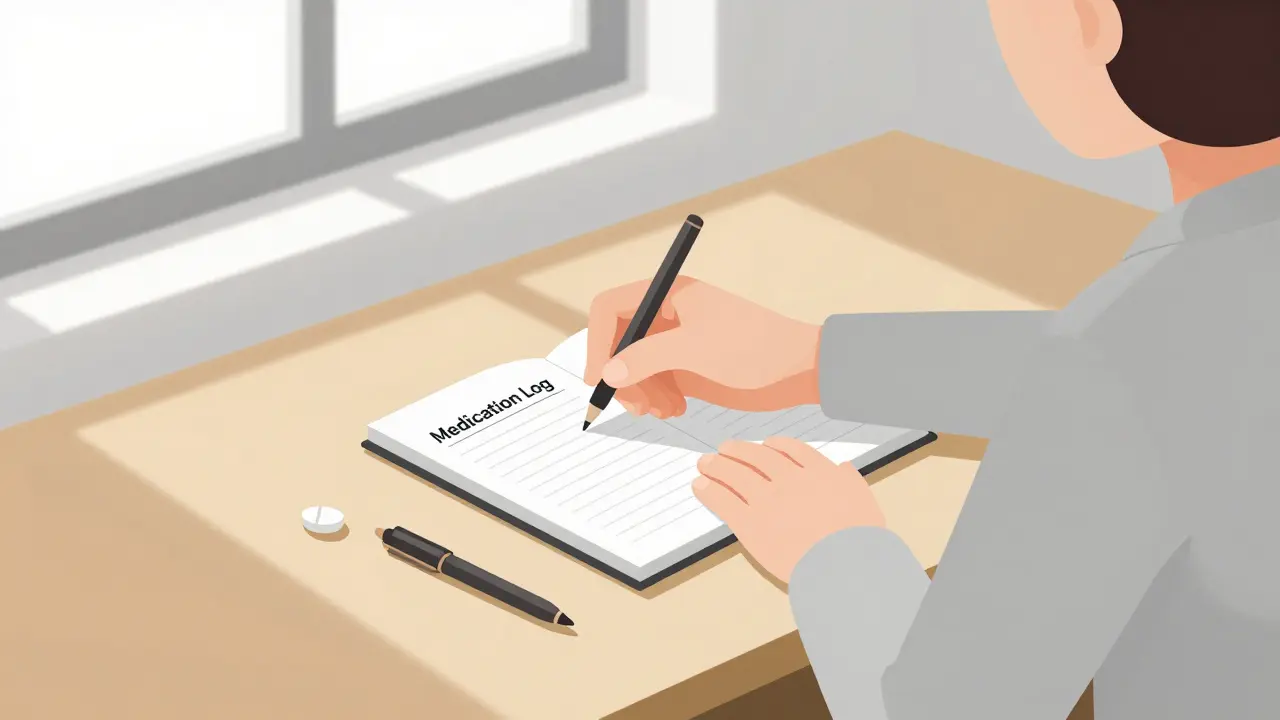
Every year, thousands of people in the UK and around the world accidentally take too much of a medication - not because they meant to, but because they lost track. A pill taken too early. A double dose because the last one was forgotten. Mixing painkillers with sleep aids without realizing the danger. These aren’t rare mistakes. They’re preventable - with a simple tool most people ignore: a medication log.
It’s not about being paranoid. It’s about being smart. If you or someone you care about takes more than one medication - especially opioids, benzodiazepines, or any drug that affects the central nervous system - a daily log isn’t just helpful. It’s life-saving.
Why Medication Logs Work
Prescription Drug Monitoring Programs (PDMPs) help doctors see what you’ve been prescribed across clinics. But they don’t tell you what you actually took. You might have skipped a dose. You might have crushed a pill. You might have taken a friend’s leftover painkiller because your back hurt worse than usual. PDMPs can’t track that. Only you can.
A medication log closes that gap. It records what you took, when, how much, and how you felt. That’s the data that prevents overdose. The CDC says combining opioids with alcohol or sedatives increases overdose risk by up to 15 times. If you don’t write it down, you won’t remember it. And if you don’t remember it, you might do it again.
What to Write in Your Log
Don’t overcomplicate it. A good log doesn’t need fancy apps or spreadsheets. Just these five things, every time you take something:
- Medication name - Write the full name. Not “the blue pill.” Not “my back medicine.” Write oxycodone 5mg or alprazolam 0.5mg.
- Dose taken - How many milligrams? How many pills? Even if it’s half a pill, write it. “1/2 tab” is better than “a little.”
- Time taken - Use 24-hour time. 14:30 is clearer than “2:30 in the afternoon.”
- Reason for use - “Headache,” “anxiety,” “can’t sleep,” “pain flare-up.” This helps you spot patterns. Are you taking it because you’re in pain - or because you’re bored, stressed, or lonely?
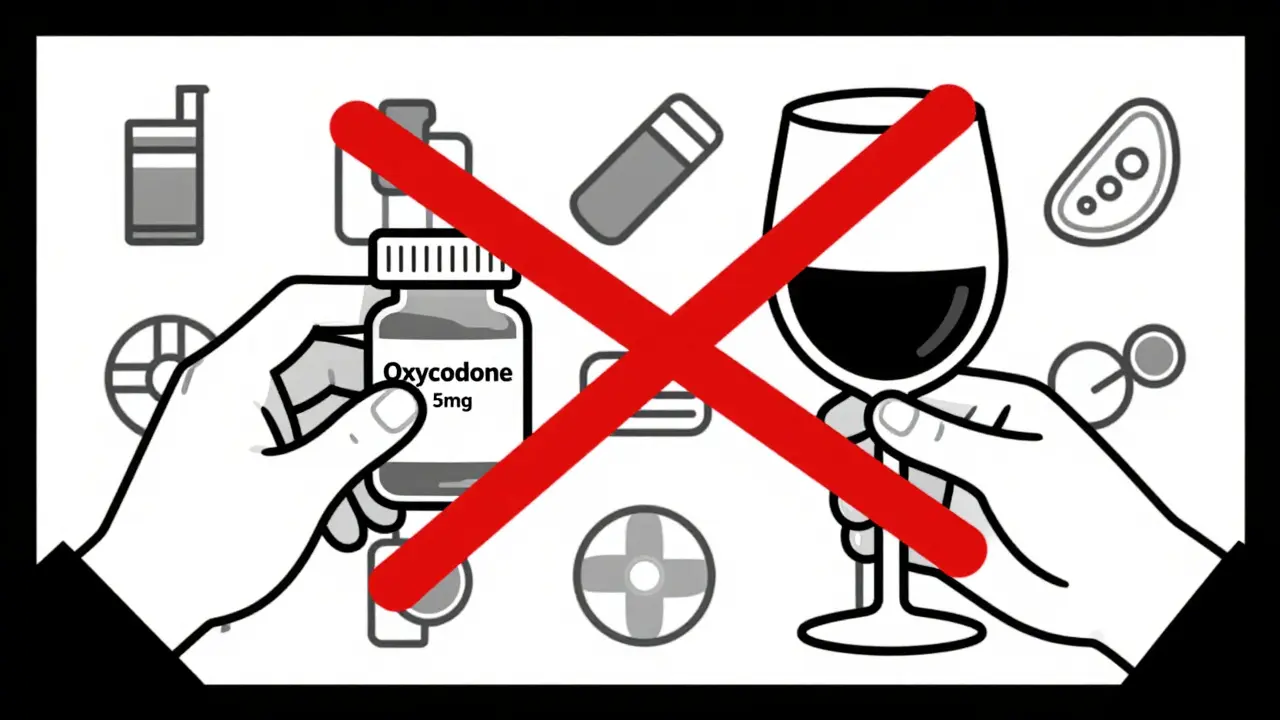
- Other substances used - Alcohol? Cannabis? Sleeping pills? Even a glass of wine counts. Record it. Mixing opioids with depressants is the leading cause of fatal overdose.
Optional but powerful: add how you felt 30 minutes later. “Drowsy,” “no pain,” “nauseous,” “clear-headed.” This helps you notice if a dose is too high - or if you’re building tolerance.
How to Start - Even If You’re Not Sure
You don’t need to be perfect. You don’t need to start today. But if you’ve ever taken a pill and then thought, “Wait - did I already take that?” - that’s your sign.
Grab a notebook. Or use the notes app on your phone. Or print a simple table from the internet. Here’s what a single entry looks like:
| Date | Time | Medication | Dose | Reason | Other Substances | Effect |
|---|---|---|---|---|---|---|
| Jan 18, 2026 | 14:30 | Oxycodone | 5 mg | Lower back pain | None | Pain reduced, slightly drowsy |
| Jan 18, 2026 | 21:00 | Alprazolam | 0.5 mg | Anxiety | 1 glass wine | Very sleepy, hard to stay awake |
That’s it. Two entries. In under a minute. But now you know: you took a depressant with alcohol. That’s not normal. That’s risky. And next time, you’ll think twice.
What to Do When You See a Pattern
After a week, look back. Do you notice anything?
- Are you taking more than prescribed? (Even “just one extra” adds up.)
- Are you taking meds at night because you’re not sleeping - and then taking more to feel normal the next day?
- Do you always take something after a stressful day?
- Are you mixing meds with alcohol more often than you thought?
These aren’t failures. They’re signals.
If you see a pattern - like taking oxycodone every Friday after work because you’re exhausted - talk to your doctor. Bring your log. Say: “I’ve been taking this more than I meant to. Can we look at this?”
Doctors don’t judge logs. They rely on them. The CDC says clinicians should review a patient’s full medication history before prescribing opioids. Your log gives them that history - even if you missed a refill or got a pill from a friend.
Digital vs Paper - Which Is Better?
There’s no right answer. It’s about what you’ll actually use.
Paper logs are simple. No battery. No distractions. You can keep it in your wallet. You can show it to a friend or paramedic in an emergency. You can scribble on it. You can tear out a page if you need to.
Digital logs (apps or phone notes) can remind you when to take your meds. Some even flag dangerous combinations - like “alprazolam + alcohol = high overdose risk.” But if you forget your phone, you forget your log.
Best option? Start with paper. Get in the habit. Then try an app like Medisafe or MyTherapy if you want reminders. But don’t let tech replace consistency.
Sharing Your Log - For Safety
The SAMHSA Overdose Prevention Toolkit says: “Never use alone.” That’s not just about drugs. It’s about awareness.
If you’re taking something risky - especially opioids or benzodiazepines - share your log with one trusted person. Not to control you. Not to judge you. Just so they know what you’ve taken.
They don’t need to understand every term. Just know: “If they’re slurring words, barely breathing, or unresponsive - call 999. They’ve taken too much.”
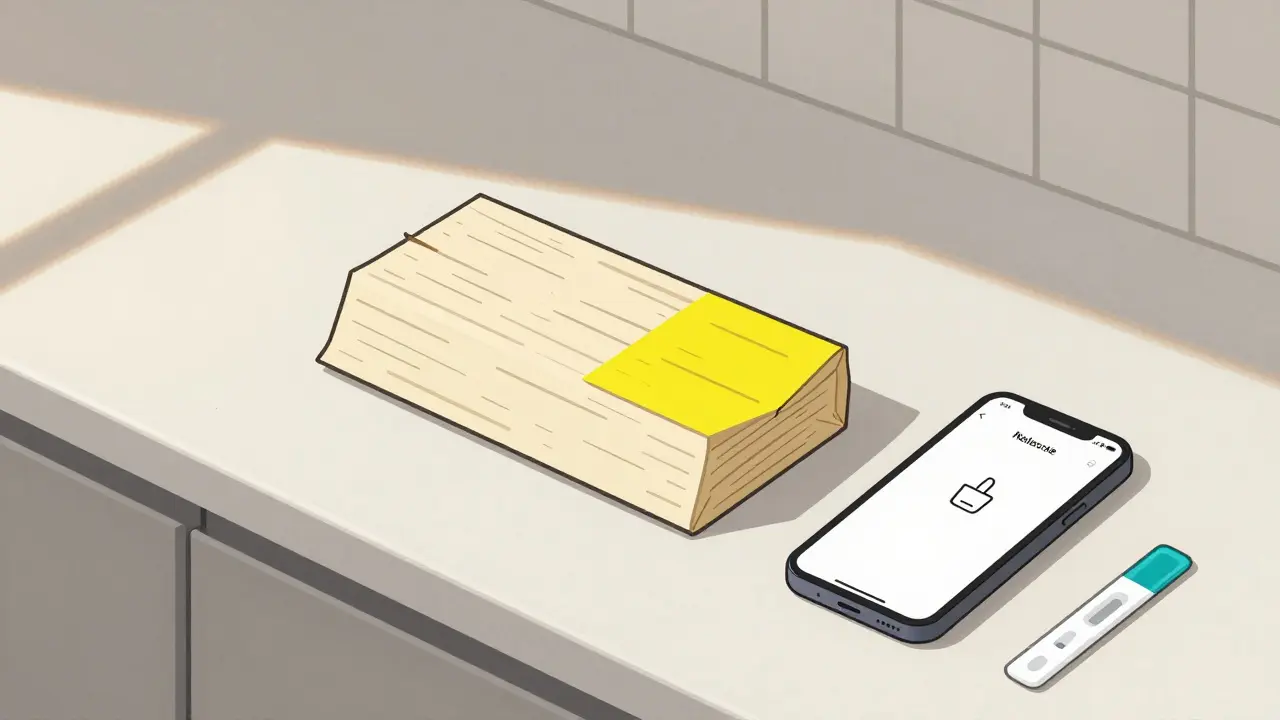
Some harm reduction groups in Bristol give out free naloxone kits. Ask for one. Keep it with your log. If you ever need to use it, your log tells responders exactly what you took - and when.
Common Mistakes (And How to Avoid Them)
- “I’ll remember.” You won’t. Memory fails under stress, fatigue, or pain. Write it down anyway.
- “I only take it when I need it.” That’s exactly when mistakes happen. Dose increases sneak up. Write it.
- “I don’t take opioids.” What about sleep aids? Muscle relaxers? Anti-anxiety pills? These are depressants too. They kill when mixed.
- “It’s too much work.” One line per dose. Two minutes a day. Less time than scrolling Instagram.
Use test strips if you can. Fentanyl and xylazine are showing up in pills that look like prescription meds. A $5 test strip can save your life. Note the result in your log: “Oxycodone 10mg - tested, no fentanyl.”
When to Ask for Help
A log isn’t just for tracking. It’s a tool for change.
If you notice:
- Needing more to get the same effect
- Taking meds to feel normal, not to treat pain
- Feeling anxious when you miss a dose
- People asking if you’re okay more often
That’s not weakness. That’s your body telling you it’s time to adjust.
Speak to your GP. Bring your log. Say: “I’m worried about how much I’m taking.” You’re not a failure. You’re taking control.
There are free, confidential services in the UK - like Frank or the NHS Addictions Support Line - that help people manage medication safely. You don’t need to quit cold turkey. You just need to be honest. And your log makes that easy.
Final Thought: This Isn’t About Rules. It’s About Awareness.
Overdose doesn’t happen because someone is “addicted.” It happens because someone lost track.
A medication log doesn’t fix addiction. But it gives you back your awareness. It turns guesswork into clarity. It turns panic into control.
You don’t need to be perfect. You just need to be consistent. One entry at a time. One day at a time.
Because the difference between life and death isn’t always a big decision. Sometimes, it’s just writing down what you took - and remembering it the next time you reach for the bottle.
Stacy Thomes
January 23, 2026 AT 19:15This changed my life. I was taking oxycodone and wine every night and never realized how dangerous it was until I started logging. Now I write it down-no excuses. I’m alive because of this.
dana torgersen
January 25, 2026 AT 11:26you know… i’ve been thinking… like… really thinking… about how we’re all just… trying to… numb the noise? and this log? it’s not about pills… it’s about… noticing… the silence between the doses…? maybe… that’s… the real medicine…??
Janet King
January 27, 2026 AT 02:20Medication logging is a clinically supported practice recommended by the CDC and WHO for patients on polypharmacy regimens. Consistent documentation reduces medication errors by up to 40% in high-risk populations. Start with a printed template. Update it immediately after each dose. No exceptions.
Vanessa Barber
January 27, 2026 AT 10:25Yeah sure. Log everything. Next you’ll tell me to track my breathing and my dreams too. I take my meds fine. I don’t need a diary to tell me when I’m high.
charley lopez
January 28, 2026 AT 00:43The structural integrity of this intervention is sound. The operationalization of temporal, pharmacological, and behavioral variables into a discrete data matrix enables longitudinal risk stratification. However, adherence remains the primary confounder.
Susannah Green
January 28, 2026 AT 16:00I use a free app called Medisafe-it sends me alerts, syncs with my pharmacy, and even flags interactions. I also print a copy every month and bring it to my doctor. It’s not a chore-it’s peace of mind. Try it. You won’t regret it.
Anna Pryde-Smith
January 29, 2026 AT 21:56My brother died because he didn’t log his meds. He thought he was fine. He took one more pill. One. More. Pill. And now he’s gone. This isn’t a suggestion. It’s a lifeline. Do it. For him. For you.
Oladeji Omobolaji
January 30, 2026 AT 04:21In my village back home, we don’t write logs. We ask our mothers. But I like this idea. I’ll try it. Maybe my cousin will too. He takes too many pills for sleep.
Dawson Taylor
January 30, 2026 AT 12:46Consistency over perfection. Awareness over control. The log is not a judgment-it is a mirror.
Sallie Jane Barnes
January 31, 2026 AT 21:04I shared my log with my sister last week. She didn’t say much. But she started her own. That’s all I needed. Thank you for writing this. Not everyone gets it.